Tuesday, November 20, 2007

LDS Women: Working Without Going to Work

Julie B. Beck, General President of the Relief Society of the LDS church, gave a wonderfully inspired talk during the past General Conference entitled Mothers Who Know. A sign of just how inspired this talk was is the small but vocal amount of criticism the talk has garnered from within the LDS church. The point of the talk was that the ideal LDS woman desires to be a mother, to have children, to be a person of integrity, and to be spiritually minded as opposed to being materialistic and superficial.


My wife has just finished a great book by Jane Clayson Johnson (former LDS CBS anchor) entitled, I am a Mother . According to my wife and her friends, this book recounts Jane Clayson's decision to turn down a contract renewal at CBS so that she could focus on being a wife and mother. The book's main point seems to be that "just being a mother is enough." However, in discussing the book and contrasting it's thesis with Pres. Beck's talk, my wife is of the opinion that "just being a mother" does not represent LDS Doctrine, nor does it correlate in any way with the spirit and message of Pres. Beck in talk during this past General Conference.

Now, don't misunderstand, Jane Clayson's book is excellent. However, it is clear that Clayson's life since her decision to turn down the CBS job starkly contradicts her thesis statement. Being "just a mother" is not enough for Clayson. That's why she wrote this book and why she travels the country on a book tour and giving endless firesides and motivational speeches. In the same way, "just being a mother" shouldn't be considered enough for any woman. And again we get into the pendulum swinging false dichotomy thing yet again where one side argues that just being a mom is good enough while the other side argues that woman need to perform a male role to be considered of value to society.

When Pres. Beck said that "mothers who know desire to bare children, are nurturers, and do less" she is not saying that just being a mother is enough. But on the other hand, the measure of a woman's worth should not held to a male standard. The crux of Pres. Beck's talk was that baring and nurturing children along with personal spirituality and obedience are the things that will bring women their most fulfillment in life. This is not an issue of capability. The issue is that at the end of the day, if a woman earns all the honors of men but never rears a family she is more likely to feel regret. Now the other side is trying to tell us that this guilt is artificially put on women by a negative and chauvinistic society and that if we changed the traditional foundation of our society that women could be freed to perform the male role be be freed from the oppressive feelings of regret and guilt.

I do not want to be misunderstood either on the point of women in the workplace. I fully support women in the workplace. Women in the workplace make an amazing and critical contribution. I fully support allowing women the freedom to choose when and if they will gain an education, work, marry and have children. However, I hope I can be free to encourage and champion the role of woman as mother and nurturer in the home.

That said, "just being a mother" is not enough for any woman. It is not enough for Pres. Beck, for Jane Clayson, or my wife, and does not reflect LDS Doctrine in any way. My wife told me as we discussed this Clayson book and the Beck talk that it is very important that she feel she can both work inside and outside the home without having to leave her children and go to work outside the home.

So, how does my wife find the right balance in her life. Well, honestly she hasn't always been balanced. But, she choose to get married and have a family during college. And we have been blessed to have 3 healthy children despite considerable difficulty and adversity. She has worked hard to develop a skill as an ASL (American Sign Language) interpreter. As it turns out she has not finished her college degree yet which she has mixed feelings about. When we moved to our current job we were disappointed that there is not a prominent deaf community in the area. Consequently, my wife hasn't had the pleasure of using her ASL skills the last 2 years. However, as divine providence would have it, a member of our LDS congregation is loosing her hearing and now requires ASL translation. My wife hasn't been happier since she has started to ASL translate for this deaf sister each Sunday and to teach a Sunday School class in ASL. She also is busy planning baby showers for other new mothers in our neighborhood and social circle as well as planning play dates, going to the gym regularly, making dinners when needed and planning other social engagements. She also loves to actively participate in our children's school classes. And she has 4 of her best girlfriends who she went to highschool with who all attend medical school here and who look up to her and envy her.

My wife's experience supports that "just being a mom" should never be considered enough for any woman. My wife will be the first to tell you that she is far from the ideal (I disagree however). She has no intention to be a so-called "supermon" and we make it a point to ignore the "Jones'" and the latest fashions. And although the home is the source of her greatest happiness and joy, it is important for my wife to be a well-rounded, productive, and balanced individual where she is free to work inside and outside the home without being forced to go to work.

Monday, November 12, 2007

Repentance: Witnessing God's Grace

Christian religions have debated for centuries over the place of grace and works, faith and repentance, in man's salvation. One side points to scriptures which suggest that the mear action of confessing that Jesus is Christ or accepting Christ as your Savior is all that is necessary for salvation from hell. Matt. 10: 32, Rom. 10: 9-10
However, this over-simplification neglects many other scriptures which speak of repentance, baptism, and obedience to the commandements. Philip. 2: 12, Heb. 5: 9 Looking past the obvious false dichotomy present in such arguments, the Book of Mormon clarifies how the doctrine of faith and repentance work together unto salvation. 2 Ne. 25: 23, Rev. 1: 5, Hel. 5: 10, 41.

The Church of Jesus Christ teaches that "through the Atonement of Christ, all mankind may be saved, by obedience to the laws and ordinances of the Gospel." Consequently, LDS doctrine focuses on repentance and obedience as well as faith in Jesus Christ. Now, some professors of religion argue that teaching obedience, repentance, and ordinances as a part of faith in Christ is somehow denying Christ's grace. However, the Bible clearly teaches that we show our faith in and love for Christ though obedience and repentance. James 2: 14, John 14: 15

It is misguided to consider a call to repentance a denial of God's grace. The gospel of repentance should not be construded into the idea that man can somehow save himself. That is not the point. The point of repentance and then obedience thereafter is for the individual to witness the grace, power, and mercy of Christ's Atonement in his life. No man could repent without God's grace. But as we actively engage in the process of sanctification, we can become a witness to the power of God. The power of Christ's Spirit which enters into our hearts washing away our sins, purging us of any desire or disposition to do evil, and changing our hearts that we become new creatures; disciples of Christ, sons and daughters unto God.

And through our faith in Christ, we can experience the miraculous transformation and realize that God is still a God of miracles who is intimately involved in the details of our lives. Personally, I appreciate the consistent exhortation by my church to good works and repentance. I need the daily reminders. The better I can, by God's grace, align my life with the will of God, the happier I am.


Active participation in the repentance process by confessing our sins, setting positive goals, making restitution for wrongs committed, and removing negative external influences does not deny God's grace or power either. Since he created my body, anything I do good with my physical body is a manifestation of God's grace and power. Did not Christ teach us about removing negative influences when he taught, "if thy eye offend thee, pluck it out." Matt. 5: 29

The same principle applies to helping others. Is it denying God's grace to serve food at a soup kitchen to the poor or to teach children how to read. Is it somehow greater faith to sit at home and pray for the poor only or to actually get out there and use our God-given abilities on their behalf. Isn't it generally accepted that God answers prayers through the kindness of others and that random acts of kindness is a manifestation of the goodness of God. Isn't it generally accepted that we should act like everything depends on us and pray knowing everything depends on God. Isn't it generally accepted that we are expected to both talk-the-talk as well as walk-the-walk, in Christ. In the same way, repentance doesn't detract from God's grace or power. Rather, repentance is the power of God's grace unto salvation.

2 Thes. 2: 13 But we are bound to give thanks alway to God for you, brethren beloved of the Lord, because God hath from the beginning chosen you to salvation through sanctification of the Spirit and belief of the truth:

Tuesday, November 06, 2007

Restored Christianity

Time Magazine reported on Richard Land's, the head of the Southern Baptist Convention's Ethics & Religious Liberty Commission, labeling of the Church of Jesus Christ as a "Fourth Abrahamic Religion." While the SBC has previously considered the LDS faith a cult, Time author David Van Biema wasn't sure if this new "charitable" categorization was "a promotion or demotion."


What is wrong with letting the Church of Jesus Christ label ourselves. And who is the SBC that they can dictate who is Christian and who isn't. First off, we are not and never were trying to sell ourselves as Catholic, or Protestant, or Evangelical. Joseph Smith clearly categorized the LDS Church as RESTORED CHRISTIANITY. If you consider the official name of the church which was given by Jesus Christ to Joseph Smith via revelation; restoration is clearly inferred in the title. We are the Church of Jesus Christ of Latter-day Saints, a restored version of Christ's church in the latter days as opposed to the Church of Jesus Christ of Meridian-Day Saints.

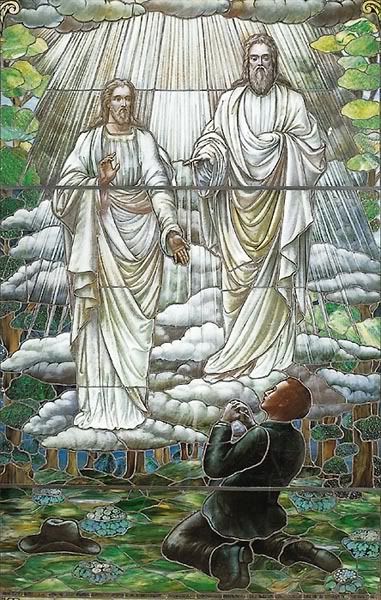
The LDS Church holds that Christ's church which he left to his 12 Apostles was removed from the Earth. While the fruit (meaning the early Saints) would remain [in God's grace] and be exalted, the kingdom itself was lost as was the priesthood authority. Consequently the Christian world fell into the Dark Ages. Then in 1820, God initiated the restoration of His kingdom to the Earth. As part of this restoration there was a restoration of priesthood keys, prophets, Apostles, ordinances, covenants, new scripture, revelations, miracles, and temples. God's kingdom on Earth is now known as the Church of Jesus Christ of Latter-day Saints.
Now is there Biblical precedent to support such a claim of apostasy necessitating restoration? Yes! Consider Adam, Enoch, and Abraham-- the great Patriarchs. For centuries we didn't have any of their writings. The only thing we knew of them was restored via Moses. But, while the Old Testament hints, restored revelation through Joseph Smith confirms that Adam was the first Christian and that Adam, Enoch, Melchizedek, and Abraham were all Christian and practiced a very similar religion that members of the LDS church practice today except for the replacement of animal sacrifice which foreshadowed Christ's atonement for the Lord's Supper as a commemoration of his death and atonement. So, it can be said that the LDS church is also a restoration of the original Abrahamic religion as well as a restoration of the original Christian religion. We aren't the 4th Abrahamic religion. We are the original Abrahamic religion.
There is nothing in the Bible that says that God wouldn't prevent men from adding or subtracting from scripture despite his commandment to the contrary. God has not violated man's agency even in this instance. Despite the heroic efforts of inspired souls who have preserved what we have of it, the Bible has been left ambiguous. Consequently, the Bible alone has failed to bring us to a unity of the faith. Therefore, after the great spiritual famine prophesied by Amos and John who told of the church/woman fleeing into the wilderness to escape the dragon that there would need to be a great restoration of all things in this the Dispensation of the Fullness of Times. Come and see for yourself.

Saturday, October 20, 2007

Thoroughly Furnished Unto All Good Works

Jeff Robinson reports on the Southern Baptist Journal of Theology, Summer edition 2005, which is dedicated to the topic of Mormonism. In his article, published in the Baptist Press News on Sep 23, 2005, he writes that "Evangelicals often find Mormonism intriguing because of the clean lifestyle and conservative values of its adherents. Mormons may make great neighbors, but their doctrines and practices within the church appear as anything but appealing to evangelicals"

Recently, several denominational Christian Churches have come out with official doctrinal statements and resolutions stating that LDS church doctrine and practices are unorthodox, strange, or weird and not in harmony with the Bible. However, before condemning us as a heretical cult and non-Christian; these statements invariably start out praising our clean living, exemplary citizenship, and strong families. Then they warn their sheep not to be fooled by the [sheep in wolf's clothing]?

First, I cannot think of a more gracious compliment from these other faiths than to recognize the goodness and Christ-likeness of the LDS people. Chances are that you know an LDS member or family at work, school, or next door. And chances are you think they are pretty great people. But then you tell yourself that they must be the exception to the rule. I will tell you that, LDS members aren't perfect, but the reality is that your LDS neighbor or friend is only typical of most LDS members.

Now, if you give the above sheep and wolf analogy some thought you will see that it is exactly the opposite of the Bible warning (Matt. 7: 15). When the Bible teaches about false prophets in sheep's clothing, "cleansing the inner vessel" or having "clean hands and a pure heart," it is talking about the personal behavior and righteousness of the believer. The author praises LDS members for being good, honest, hardworking, family-oriented, Christ-centered on the outside but then he goes on to warn the reader to beware of their bazaar doctrines and secret temple practices on the inside? It seems the author has his analogy mixed up. When the Bible speaks of righteousness, good works, and pure religion; these aspects of true Christian worship are the fruit or outward manifestations of an inner faith and devotion to Christ and not just a facade.

Here is my point. It makes no spiritual sense to say that a person or group misunderstands correct Christian doctrine and scripture but on the other hand are exemplary in terms of their moral living, family values, citizenship, and Christ-like example. According to the Bible, the whole point of doctrine and scripture in the first place is to teach you how to behave and believe and act in away that God approves of. A person cannot be Christ-like if he does not know Christ.
James 1: 27 Pure religion and undefiled before God and the Father is this, To visit the fatherless and widows in their affliction, and to keep himself unspotted from the world.
2 Tim. 3: 17 That the man of God may be perfect, throughly furnished unto all good works.
1 Tim. 1: 5 Now the end of the commandment is charity out of a pure heart, and of a good conscience, and of faith unfeigned:
John 13: 35 By this shall all men know that ye are my disciples, if ye have love one to another.
Matt. 7: 16, 20 Ye shall know them by their fruits
1 Cor. 13: 8 Charity never faileth: but whether there be prophecies, they shall fail; whether there be tongues, they shall cease; whether there be knowledge, it shall vanish away.

Unfortunately, many evangelical Christians do not recognize the importance of correct Christian doctrine because there exists such a disunity of doctrine even within churches of the same denomination in the same city. Most of my friends and colleagues tell me that it doesn't matter much what the exact doctrines are, so long as they worship Christ and study from the Bible. LDS members do not hold such a casual attitude with regard to doctrine. The LDS Church has a unified doctrine. Anywhere you go in the world, any LDS church you attend, you will hear the exact same doctrine taught and religion practiced.

Now I hope I don't have to convince you that doctrine matters. Pick a doctrine and I will give you an example of someone who excused themselves in sin, or made an incorrect choice because they did not understand the fundamentals of Christian discipleship. That doctrine does matter is the foundation assumption of these many recent doctrinal resolutions passed by the denominational Christian religions.

The point is that one of many reasons I am a member of the Church of Jesus Christ is because I feel more "thoroughly furnished unto all good works." The LDS church helps me be a better husband, a better father, a better neighbor, and a better disciple of Christ. The LDS church helps my family be stronger, more unified and more Christ-centered. Stats support that active LDS members and families are wealthier , are more educated, have much less divorce, live longer, have a lower rate of teen pregnancy, and give more to charity than active members of any other Christian denomination. So, despite our seemingly weird and wolfish doctrine, we really are Christ's sheep inside and out.

Also, the LDS Church has a far more developed culture of caring than any other religious organization. As an LDS member, I know that my and families spiritual and temporal needs will be cared for until death and beyond. Unfortunately, many of my religious friends have lamented at how poorly their church responds to individual crisis. In the LDS church, we really do take care of each other.

Doctrinally speaking, Other Christian Churches call us a non-Christian, unorthodox, religious cult because of our rejection of what we consider to be a heretical 3rd-century AD doctrine on the trinity which was fabricated in 325AD at the 1st ecumenical council of the Catholic Church. First off, the world trinity is not found anywhere in the Bible. LDS believe in the GodHead, which is found in the Bible (Acts 17: 29, Rom. 1: 20, Col. 2: 9). The GodHead comprises God the Father, The Son Jesus Christ, and The Holy Ghost who are 3 distinct entities with glorified bodies (Acts 7: 55-56), parts (Rev. 4: 2), and righteous passions (John 3: 16); but are knowable (1 Jn. 4: 7)(John 17: 2-3), and comprehensible through the Holy Spirit (1 Cor. 2: 11), and who are one in purpose (John 17: 11, 22).

All LDS doctrines including the temple are clearly supported by the Bible and by modern revelation by prophets and apostles which is also Biblical. Also, the LDS church is not and never was trying to pass ourselves off as evangelical or protestant. Joseph Smith taught that our faith and religion should be considered Restored Christianity. Our doctrine is more in-line with 1st Century Christianity than the later corrupted 3rd -century version. But if the other Christian denominations insist on excluding us from being considered Christian, at least they recognize us for being Christ-like which is what really matters.


Tuesday, October 02, 2007

Newsweek on Mitt Romney: Personal Belief and Presidency

The sub-title of this most recent Newsweek article “Voters can't connect with a candidate they feel they don't know. Mitt Romney has to decide how much he wants to share,” is evidence of an unfortunate misunderstanding about LDS Doctrine with regard to the responsibility of a an LDS member who serves in public office. A member of the LDS Church is expected to live up to his personal and religious beliefs in any and all circumstances but a public servant is admonished never to legally force or impose those beliefs on a majority who do not share those beliefs (Mosiah 29: 26).

Mitt has been clear that he doesn’t want to talk about the LDS Church but Newsweek claims, “Romney has downplayed both his religion and his own family history.” The LDS Church is not running for the presidency—Mitt Romney is. Jesus Christ taught that believers should not “cast their pearls before swine.” LDS members do not interpret this to mean that non-LDS are "swine" but that there is an appropriate place and time to speak of sacred matters. LDS hold their beliefs sacred but not secret. If a person wants to learn about the LDS faith, they are invited to speak to LDS missionaries who are appointed by the church to teach the LDS message.

Newsweek criticizes Romney for not reminiscing with a reporter about his attendance at an old LDS church in Pontiac, MI at the age of 10. I’m not sure I could say much about my membership in the LDS church before age 10 except for my baptism day. Maybe he could have talked about his happy childhood but there is nothing special about an LDS church building itself. They’re all the same. That’s why LDS members say they can go anywhere in the world and hear the exact same gospel message and feel the exact same Spirit. For LDS members, the joy comes from Christ, His gospel, and fellowship with the saints, and not the building.

Newsweek says, “Mindful of the sway of evangelical Christians over the GOP base, he has positioned himself as the candidate with conservative principles and strong faith, even adopting evangelical language in calling Jesus Christ his "personal savior" (vernacular not generally used by members of the Mormon Church).”

Yes, Mitt wants the support of the evangelicals. But to say that members of the Mormon Church don’t generally call Christ our “personal savior” is inexcusable. Other than the phrase “my personal savior” being grammatically redundant, every testimony given of Jesus of Nazareth from Joseph Smith, through all the Apostles and Prophets down to the prayers given by LDS members at home or over the pulpit has contained the confession of belief that Jesus is the Christ, Savior, and Redeemer.

Mitt’s response to the “Baptism for the dead” question with the remark, "I have in my life, but I haven't recently" is more a reflection that these baptisms are more generally done by LDS adolescents (which the article explains later on) than Mitt trying to distance himself from his religion.

Newsweek claims that “Romney has been unable to shake his authenticity problem,” calling Mitt a “flip-flopper" for his “all-too-convenient conservative-conversion” with regard to gay rights and abortion. When Mitt ran for governor of Massachusetts, he knew the majority of the electorate was pro-choice. It should be well known to the media from the famous Reed Smoot hearings that LDS Doctrine holds that LDS leadership and members need not impose their personal or religious beliefs on the majority. We call that “unrighteous dominion,” which is expressly forbidden in our Doctrine and Covenants (D&C 121: 37, 39).

So, there is nothing, which detracts from Romney’s faith for him to say when he was running for Governor of a state where a majority of it’s residents are of a liberal political ideology that, as governor, he wouldn’t try to impose his personal belief’s on his constituency by overturning Roe v. Wade. Although at the same time, as governor, he fought hard to preserve the status quo and oppose a vocal minority who sought to propagate an ideology of death against the wishes of the majority of his constituency.

The account of the exchange student Tito Cortella who lived with the Romney’s is a profound example that is in stark contradiction to the author’s conclusions. Tito recounts that the Romney’s strongly encouraged him to attend the local Catholic Church and allowed him to smoke in his room. Other clear examples of this principle are beautifully described in the article including how the Romney’s kept alcohol in their home for guests and how Romney approved an investment in a media company which also included R-rated material. Romney approved the deal but did not invest any of his personal money.


Now that Romney is running for President, his constituency shares his personal ideology of life. Therefore he can, without reservation, run a campaign based on that ideology. This is not Romney re-inventing himself. This is a man who is running on the principle that a leader should not impose his ideology on others but he should persuade them to do well by patience, perseverance, and example.

(The LDS Church encourages its members to be politically active but does not support a particular party or candidate, even if he happens to be LDS. But don't be surprised if Romney win's Utah)