Saturday, December 13, 2008

Becoming vs. Existing: Examples from the Greek and Hebrew

Joseph Smith taught that we should believe that Bible as far as it is translated or interpreted correctly. What does Joseph Smith mean by this statement. Is he trying to destroy faith in the Bible? No, he is reminding us that that are many Bible translations and even many versions in the original languages. So, we have to study the scriptures out carefully to understand the original intent of the authors. And in case you think there are no significant differences in Bible translations or version; the following is a brief example of how a few words can change a whole theology, understanding of God, and how man fits into it.

As I stated in my last post, there exists a major theological difference between LDS and Evangelicals with regards to the eternal nature of the spirit of man, and with regards to the process of creation. Evangelicals believe that God creates from nothing. Or in other words He brings things in to existence from nothing. LDS believe that God made everything "that was made" (John 1:3), which suggests there are some things in this universe that are co-eternal and self-existent as God is.

In my last post, I pointed out how John 1:3 talks about God bringing things into being as opposed to bringing things into existence. A friend of mine brought to my attention two additional scriptures that in recent Bible versions support creation "ex nihlo" by saying that God brought things into existence." However, the KJV and older Bible versions do not use this language or convey this idea. In this post I will look at the original Greek using the online resource Biblos.com and BlueletterBible.com to see if these modern translations are justified in their alterations to the Bible.

John 1:3 (GWT) Everything came into existence through him. Not one thing that exists was made without him.
John 1:3 (WNT) All things came into being through Him, and apart from Him
nothing that exists came into being.
John 1:3 (KJV) All things were made by him; and without him was
not any thing made that was made.
Greek (WH / NA27 / UBS4) πάντα δι' αὐτοῦ ἐγένετο, καὶ χωρὶς αὐτοῦ ἐγένετο οὐδὲ ἕν ὃ γέγονεν


LEXICON
kai -
kai and, also, even, so then, too
choris - choris beside, by itself, without.
autau - autos him
egeneto - ginomai to cause to be, to become, come into being (aorist tense)
oude - oude not however, neither, nor, not even, never, no
en - heis one, only, other, some.
0 - hos who, which, what, that, other, some, that, what, which
gegonen - ginomai happen, to cause to be, to become, come into being (perfect active indicative)


John, in this verse, sounds very redundant. John uses the verb "ginomai," which means "come into being," "happen," or "made" 3 times. Here John says that God brought into being all things. And that without God nothing was brought into being, that was brought into being. What this suggests is that not all things needed to be made or brought into being. Some things already existed or are self-existent and eternal.

Evangelicals interpret this to say this should read "and without him was not anything made that exists." Meaning, if it exists at all, that God brought it into existence. But there are 2 big problems with this. First, "ginomai" or "gegonen" does not mean "come into existence". "ginomai" means "come into being" or "happened." "being" has an entirely different connotation than "existing." I might become something, while still existing before becoming what I became. But if you came into existence, there was nothing before that.

Second, the tense is all wrong. The verb in the Greek is in the 3rd person perfect tense. The word "egeneto" is the Greek word for "made" in the 1st and 2nd use which is in the Aorist tense which suggests a simple occurance (ntgreek). But the last use of the verb "gimomai" or "gegonen" is in the perfect tense which suggests the progress of an action has been completed and the results of the action are continuing on (ntgreek). "exists" is infinitive tense (non-finite) and is considered a verbal noun. Therefore, the Evangelical interpretation is contrary to the Biblical Greek.

Col. 1: 16-17 (ISV) For by him all things in heaven and on earth were created, things visible and invisible, . . . All things have been created through him and for him. He himself existed before anything else did, and he holds all things together.
Col. 1: 16-17 (KJV) For by him were all things created, that are in heaven, and that are in earth, visible and invisible, . . . all things were created by him, and for him: And he is before all things, and by him all things consist.
Greek (WH / NA27 / UBS4) καὶ αὐτός ἐστιν πρὸ πάντων καὶ τὰ πάντα ἐν αὐτῷ συνέστηκεν,

LEXICON
kai - kai and, also, even, so then, too
autos - autos him
estin - esti he, she, it, is; also, they are (present indicative)

pro - pro prior to, above, ago, before, or ever.
panton - pas all, any, every, the whole
kai - kai and, also, even, so then, too
ta - ho the, this, that, one, he, she, it, etc.
panta - pas all, any, every, the whole
en - en in, at, (up-)on, by
autos - autos him
sunesteken - sunistao to set together, to put together, to constitute (perfect active indicative)


Here in 1 Col 1:16 the Greek verb for create is "ektisthe" or root "ktizo" means to fabricate, form, or make. Again this is the same as the Hebrew word "bara." And yes, God did arrange all things visible and invisible for operation in this universe. But this does not exclude that other things are eternal and self-existent as God is

In 1 Col 1:17 The verb for "consist" is "sunesteken" or root "sunistao" again in the Perfect tense which means "are set together" or "were put together." Consist is again the infinitive tense or a verbal noun. The proper tense would say [And he is before all things, and by him all things were put together]. Again, applying the appropriate Perfect tense to the translation suggest that creating involved forming, arranging, organizing and shaping and not bringing somthing into existence from nothing.

Rom 4:17 (SIV) As it is written, "I have made you the father of many nations." Abraham acted in faith when he stood in the presence of God, who gives life to the dead and calls into existence things that don't yet exist.
Rom 4:17 (KJV) As it is written, I have made thee a father of many nations,) before him whom he believed, even God, who quickeneth the dead, and calleth those things which be not as though they were.
Greek (WH / NA27 / UBS4) καθὼς γέγραπται ὅτι πατέρα πολλῶν ἐθνῶν τέθεικά σε, κατέναντι οὗ ἐπίστευσε Θεοῦ τοῦ ζωοποιοῦντος τοὺς νεκροὺς καὶ καλοῦντος τὰ μὴ ὄντα ὡς ὄντα·

LEXICON
kai - kai and, also, even, so then, too
kalountos - kaleo to call, call (forth) (present active)
ta - ho the, this, one, things
me - me neither, never, no wise, none, nor, nothing, that not,without.
onta - on being, be, come, have. (present active).
os - hos though, which how, in that manner
onta - on being, be, come, have.(present active)

My translation is [and calls those things which are not as though they are]. This speaks of the Justification of Christ and not creation out of nothing. I'm not sure how you "and calls into existence things that don't yet exist." from the text. Also, you cannot get "and calls the nonexistent into existence" because nonexistent would be the infinitive tense or a noun verb.

Rev 4:11 (NASB) Worthy are You, our Lord and our God, to receive glory and honor and power; for You created all things, and because of Your will they existed, and were created.
Rev 4:11 (KJV) Thou art worthy, O Lord, to receive glory and honour and power: for thou hast created all things, and for thy pleasure they are and were created.
Greek (WH / NA27 / UBS4) Ἄξιος εἶ, ὁ Κύριος καὶ ὁ Θεὸς ἡμῶν, λαβεῖν τὴν δόξαν καὶ τὴν τιμὴν καὶ τὴν δύναμιν, ὅτι σὺ ἔκτισας τὰ πάντα, καὶ διὰ τὸ θέλημά σου ἦσαν καὶ ἐκτίσθησαν.
Greek (Tischendorf 8th Ed.) εἰσιν καὶ ἐκτίσθησαν
Greek (Byzantine / Majority Text) εἰμί καί κτίζω

LEXICON
kia - kai and, also, even, so then, too
dia - dia through, for, because
to - ho the, this, that, one, he, she, it, etc.
thelema - thelema a determination, choice, desire, pleasure, will.
sou - sou of thee, thy, thee, thine (own), thou, thy.
esan - eisi were, they are, are, be, is (imperfect indicative)
kia - kai and, also, even, so then, too, etc.
ektisthesan - ktizo to fabricate, found, create, make (aorist passive indicative)

My translation is [and because of thy will, they were and are created]. This cannot read "they existed and were created" because the tense is messed up. "existed" would be the infinitive tense again. However, "esan" is in the imperfect past tense and the "ektisthesan" is in the aorist tense which is a past tense giving no indication of duration. It is also often referred to as the 'punctiliar' tense. 'Punctiliar' in this sense means 'viewed as a single, collective whole,' a "one-point-in-time" action (ntgreek).

Zech 12:1 The burden of the word of the LORD for Israel, saith the LORD, which stretcheth forth the heavens, and layeth the foundation of the earth, and formeth the spirit of man within him.

God formed or brought into being the sprit of man. We are the spiritual offspring of god. But this doesnt mean it was formed from nothing. In fact the word used for create is "yatsar" yatsar (yaw-tsar') to mould into a form; especially as a potter; figuratively, to determine (i.e. form a resolution) -- earthen, fashion, form, frame, make(-r), potter, purpose.

Exodus 3:14 (KJV) And God said unto Moses, I AM THAT I AM: and he said, Thus shalt thou say unto the children of Israel, I AM hath sent me unto you.
Exodus 3:14 (NASB) God said to Moses, "I AM WHO I AM"; and He said, "Thus you shall say to the sons of Israel, 'I AM has sent me to you.'"
Greek OT: Septuagint καὶ εἶπεν ὁ θεὸς πρὸς μωυσῆν ἐγώ εἰμι ὁ ὤν καὶ εἶπεν οὕτως ἐρεῖς τοῖς υἱοῖς ισραηλ ὁ ὢν ἀπέσταλκέν με πρὸς ὑμᾶς

Hebrew Bible ויאמר אלהים אל משה אהיה אשר אהיה ויאמר כה תאמר לבני ישראל אהיה שלחני אליכם׃

LEXICON
ehyeh - hayah
to be or become, come to pass, self-existent one

asher - asher A relativizer, used to introduce a relative clause used as a conjunction rather than a pronoun; that, which, who, whom
ehyeh - hayah to be or become, come to pass, to happen, self-existent

There has been a lot of speculation about just what the name "I AM THAT I AM" is supposed to mean. Many see this as a declaration of God's self-existent and eternal nature. It is interesting that the verb used in the title for God is the same verb used in the beginning of many verses in the Bible and the Book of Mormon which translates to "It came to pass" or "It happened that" and which is the same kind of verb the New Testament Apostles used to describe the creative process of God.

Additionally, the parallel structure in the title reminds me of other titles for God such as "God of gods, Lord of lords, and King of kings." I wonder if this name for God isn't also a title like these other names for God. Could "I AM THAT I AM" be translated the "Self Existent of self existent?" It maybe, that this sacred name for God could coinside with several scriptures in the New and Old Testaments that also refer to God as the God of gods, Judge of judges, King of kings, Lord of lords, the Most High God and the Most High Priest. If this were the case, the name would reveal a great deal about the eternal nature of man as well as our relationship with God as spirit children of Our Heavenly Father.
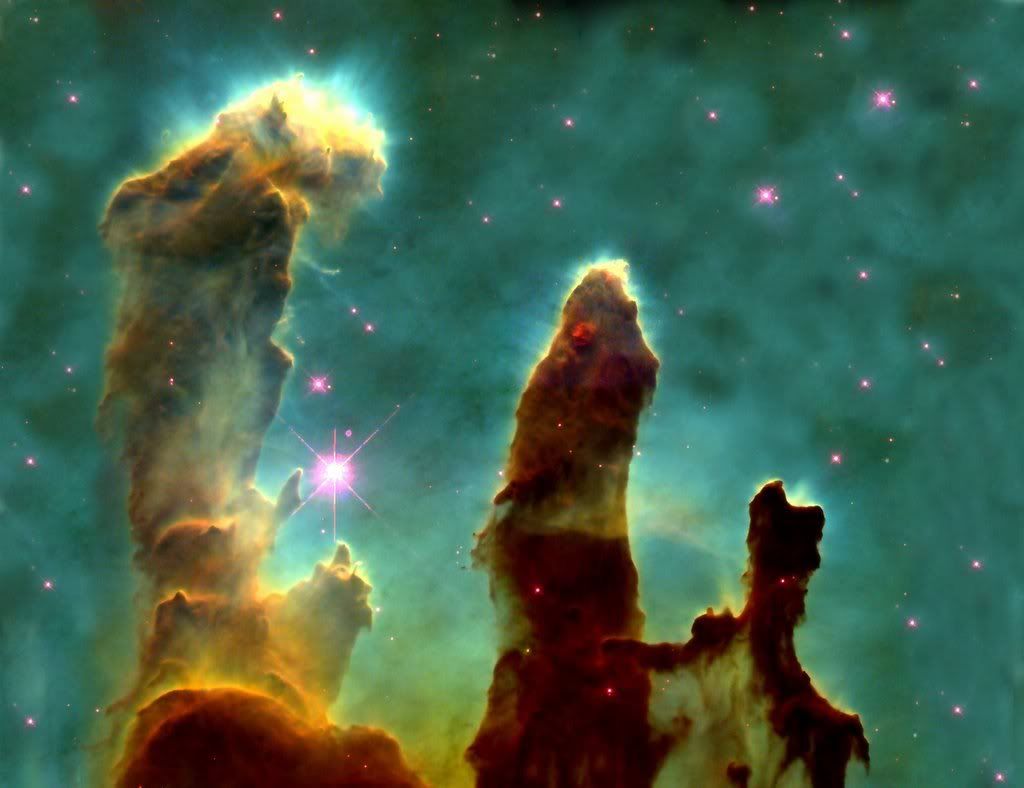
Creation means bring into being, not bring into existence

One major theological difference between Evangelicals and members of the Church of Jesus Christ of Latter-day Saints is on the meaning of creation. Evangelicals interpret the Bible to say that God is eternal and self-existent and that everything in the universe was conjured or came into existence out of nothing. LDS on the other hand understand the Bible to teach that God brought everything in the universe into being. Or that in other words, God formed, organized, and arranged everything both visible and invisible for operation in the Universe. But that element and spirit are, according to universal law, self-existent and eternal and therefore do not need to be brought into existence because those things have always existed. If the LDS view is correct, then what is the Biblical and logical support for the LDS view?

#1 if you believe that God started bringing things into existence at the Beginning out of nothing, then you have to explain how you logically can reject the law of conservation of energy and mass which says that energy and mass are not created nor destroyed but just converted from one form to another.

#2 If you believe that there are no other self-existent things in the universe, then you have to explain how it is that God brought Satan into existence out of nothing. Did God mess up? Did God give a mass murderer a gun knowing full well what Satan would do with it? Rabbi Kushner in his book "Why bad things happen to good people" that you either have to accept that God doesn't care, or that the universe is like a clock and God can't stop it.

#3 LDS on the other hand understand that "to create" or the Hebrew word "bara" in the Bible means to "cut out, form, shape, organize, and arrange" and not to "conjure" from nothing "ex nihlo."

#4 LDS understand that God did create, organize, and arrange all thing in heaven and Earth but from self-existent eternal material. Spirit is an example of purified material that is eternal and has no beginning or end. God is spirit. God is eternal. Therefore spirit is eternal. Spirit is element (ta stoicheia tou kosmou). Joseph Smith taught there is no such thing as immaterial matter and that even spirit is matter, but just more refined.

#5 John 1: 3 All things were made by him; and without him was not any thing made that was made. To some, John is being very redundant. Is he just saying the same thing 3 times? John uses the verb "ginomai," which means "come into being" 3 times. Here John says that God brought into being all things. And that without God nothing was brought into being, that was brought into being. What this suggests is that not all things needed to be made or brought into being. Some things already existed or are self-existent and eternal.

#6 Evangelicals interpret this to say this should read "and without him was not anything made that exists." Meaning, if it exists at all, that God brought it into existence. But there are 2 big problems with this. First, "ginomai" or "gegonen" does not mean "come into existence". "ginomai" means "come into being." "being" has an entirely different connotation than "existing." I might become something, while still existing before becoming what I became. But if you came into existence, there was nothing before that.

#7 Second, the tense is all wrong. The verb in the Greek is in the 3rd person perfect tense. The word "egeneto" is the Greek word for "made" in the 1st and 2nd use which is in the Aorist tense which suggests a simple occurance (ntgreek). But the last use of the verb "gimomai" or "gegonen" is in the perfect tense which suggests the progress of an action has been completed and the results of the action are continuing on (ntgreek). "exists" is infinitive tense (non-finite) and is considered a verbal noun. Therefore, the Evangelical interpretation is contrary to the Biblical Greek.

#8 Col. 1: 16 For by him were all things created, that are in heaven, and that are in earth, visible and invisible, . . . all things were created by him, and for him: And he is before all things, and by him all things consist. Here the Greek verb for create is "ektisthe" or root "ktizo" means to fabricate, form, or make. Again this is the same as the Hebrew word "bara." And yes, God did arrange all things visible and invisible for operation in this universe. But this does not exclude that other things are eternal and self-existent as God is.

#9 The verb for "consist" is "sunesteken" or root "sunistao" again in the Perfect tense which means "are set together, stands together, recommends, or demonstrates" Consist is again the infinitive tense or a verbal noun. The proper tense would say "And he is before all things, and by him all things were set together" Again, applying the appropriate Perfect tense to the translation suggest that creating involved forming and shaping and not conjuring into existence from nothing.

#10 The idea that God creates by bringing things into being as opposed to bringing things into existence fits with the Biblical description of God as a builder of a house or the potter of clay. Paul says “Heb. 3: 4 For every house is builded by some man; but he that built all things is God.” and “Rom. 9: 21 Hath not the potter power over the clay, of the same lump to make one vessel unto honour, and another unto dishonour? “ Isaiah uses similar language, “Isa. 64: 8 But now, O Lord, thou art our father; we are the clay, and thou our potter; and we all are the work of thy hand.”

#11 Yet, another Biblical example that suggests that creation was from pre-existing co-eternal materials is the miracles of Jesus. When the creator made wine at the wedding. Jesus didn't conjure or bring the wine into existence from nothing, but He changed water into wine. Also, when Jesus fed the 5000, He didn't conjure bread and fish but multiplied and expanded the bread and fish that were available.

#12 Why is the eternal nature of matter so important? Because, it means that the soul or spirit that resides in our bodies existed before we were born. The spirits of man came from God and dwelt with God in heaven before coming to Earth and that our spirits did not just come into existence at birth. And what is significant about that? That means that the goal of this life is not just to get back to God. We were with God before. The goal of this life is to be empowered by Christ to become like God. Therefore, the definition of eternal life is not just life with God but life as God lives. This is what it means to know God.

#13 Also, the eternal nature of matter means that the spirit or intelligence of man is self-existent and had no being just as it will have no end. And that our will, which is the essence of existence and which is associated with our mind and intelligence was not given to us but is ours. And this is why the Bible says that God bought us with the price, and that we are His purchased possessions. If God created us from nothing and brought us into existence, God wouldn't have to buy us. But this is why the souls of man are of great worth in the sight of God. While our souls are worthless, in our current fallen state, each of us have infinite potential and the seeds of divinity within us through Christ as children of God. And since Christ has purchased us with the price of His blood, what He expects is that we deliver what is bought and paid for; our whole will, heart, mind, and soul.

#14 In fact Peter warned that false teachers would deny that Christ really purchased us. 2 Pet. 2: 1 But there were false prophets also among the people, even as there shall be false teachers among you, who privily shall bring in damnable heresies, even denying the Lord that bought them. The emphasis here is not just the denial of the Lord, but that denial of the doctrine that Christ purchased us. In Greek is says “καὶ τὸν ἀγοράσαντα αὐτοὺς δεσπότην ἀρνούμενοι.” or “even denying the Lord purchased them”. The extra “that” changes the emphasis of the statement, the meaning and is unwarranted in the Greek text.

#15 Knowing this, only the LDS can adequately answer the atheists when they demand that Christians explain the existence of evil in the universe. Evil has always existed. Lucifer was not given will but given agency and full opportunity to choose the right. God knew Lucifer would rebel, and gave him every opportunity making him an archangel beside Michael and Gabriel and others. Lucifer rejected God and Christ of his own free will and was cast out of heaven. Lucifer acts of his own free will, and is only permitted to operate for a little season for Gods higher purposes. But Lucifer who became Satan is the Father of lies and not God. God did not bring into existence a defective creation. And we shouldn't say that God didn't know what Lucifer would become.

#16 Finally, some suggest that the belief that God did not bring all things into existence, even co-eternal things, and self-existent things means that the LDS concept of God is inferior. Somehow, God has to do what doesn't have to be done to be God. It is sort of like saying God isn't all powerful if He can't lie and get away with it. God is the sole creator of the universe, but the fact of reality is that there are self-existent things who God is Master and Lord over. And, that the opposite of created is not eternal. Something can be both created and eternal. Things can have pre-existed while still becoming later. If there really was a distinction between things that are eternal and things that are created, then man who is created could never become eternal and receive eternal life.

Friday, December 12, 2008

Irenaeus on being a man and becoming a god

Irrational, therefore, in every respect, are they who await not the time of increase, but ascribe to God the infirmity of their nature. Such persons know neither God nor themselves, being insatiable and ungrateful, unwilling to be at the outset what they have also been created mean subject to passions; but go beyond the law of the human race, and before that they become men, they wish to be even now like God their Creator, and they who are more destitute of reason than dumb animals [insist] that there is no distinction between the uncreated God and man, a creature of today. For these [the dumb animals], bring no charge against God for not having made them men; but each one just as he has been created, gives thanks that he has been created. For we cast blame upon Him, because we have not been made gods from the beginning, but at first merely men, then at length gods; although God has adopted this course out of His pure benevolence, that no one may impute to Him invidiousness or grudgingness. He declares, "I have said, Ye are gods; and ye are all sons of the Highest." But since we could not sustain the power of divinity, He adds, "But ye shall die like men," setting forth both truths the kindness of His free gift, and our weakness, and also that we were obsessed of power over ourselves. For after His great kindness He graciously conferred good [upon us] and made men like to Himself [that is] in their own power; while at the same time by His prescience He knew the infirmity of human beings, and the consequences which would flow from it; but through His love and His power, He shall overcome the substance of created nature. For it was necessary, at first, that nature should be exhibited; then, after that, that what was mortal should be conquered and swallowed up by immortality, and the corruptible by incorruptibility, and that man should be made after the image and likeness of God, having received the knowledge of good and evil.
* * *
How, then, shall he be a God, who has not as yet been made a man? Or how can he be perfect who was but lately created? How, again, can he be immortal, who in his mortal nature did not obey his Maker? For it must be that thou, at the outset shouldest hold the rank of a man, and then afterwards partake of the glory of God. For thou dost not make God, but God thee. If, then, thou are God’s workmanship, await the hand of thy Maker which creates everything in due time; in due time as far as thou art concerned, whose creation is being carried out. Offer to Him thy heart in a soft and tractable state, and preserve the form in which the Creator has fashioned thee, having moisture in thyself, lest, by becoming hardened, thou lose the impressions of His fingers. But by preserving the framework thou shall ascend to that which is perfect, for the moist clay which is in thee is hidden there by the workmanship of God. His hand fashioned thy substance; He will cover thee over too within and without with pure gold and silver, and He will adorn thee to such a degree, that even "the King Himself shall have pleasure in thy beauty." But if thou, being obstinately hardened, dost reject the operation of His skill, and show thyself ungrateful towards Him, because thou wert created a mere man, by becoming thus ungrateful to God, thou hast at once lost both His workmanship and life. For creation is an attribute of the goodness of God; but to be created is that of human nature. If, then, thou shalt deliver up to Him what is thine, that is, faith towards Him and subjection, thou shall receive His handiwork, and shalt be a perfect work of God. (Irenaeus Against Heresies, The Ante-Nicene Fathers, vol. 1:522-523)


Its irrational for men to be impatient for eternal life (time of increase) and blame God for their fallen nature. These impatient people don't know God, are ungrateful, and can't accept their current fallen state. These people impatiently wish they were like God now. These irrational people don't see a difference between uncreated God and man in his current fallen state (creature of today). Animals are content that God has created them as they are. We shouldn't blame God but praise him that we are made first men and then will eventually be made gods (lowercase g). We were made men first because we would not be able to sustain the power of divinity and would have fallen anyways. This is saying, this is why we are given time to repent and sanctify ourselves through Christ. This is why the angel was placed to guard the way of the Tree of Life so that we couldn't partake of the fruit and live forever in our sins. But that we could repent first, be sanctified by the transformative power of Christ and the Holy Ghost and then partake of the tree of Life again when we are ready to "sustain the power of divinity."

God made man like Himself "in their own power" to act for themselves and not be acted upon and to know good and evil. But God knew man would fall because of our fallen nature. But God will overcome our fallen natures through the transformative power of Christs atonement and the sanctifying power of the Holy Ghost. It was part of the plan that man, who is made in the likeness of God, learn good and evil from experience before being made immortal. How can anyone who hasn't first gone though morality first be a God? How can that person be perfect who was just created (born). How can a man hope to be immortal if he does not obey God? We first must become a man then afterward receive the glory of God. We don't make God, but God makes us. Patiently await the hands of God who will make us gods in due time. Offer God a broken heart and a contrite spirit, or a malleable soul as we were at the time we were first created (children are pure and malleable and only later become hardened). Then God can work us, change us, shape us, transform us, fashion us and adorn us. But if we harden our hearts against God and are ungrateful, we have lost our eternal life. To be created or formed and shaped is that of human nature, and we are to deliver up to God what is ours only to give which is our will. If we give our will and our whole souls to God, then we shall continue to receive his handiwork, shaping, and forming (sanctification is a process) until we become perfected in Christ.
I think the LDS doctrine on theosis is similar to the ECF concept. I like how this passage talks about the transformative and sanctifying power of God. The LDS temple ordinances and covenants are for the purpose of sanctification. These covenants which have to do with dedicating and consecrating your life to God could be referred to as sanctifying ordinances. Remember the opposite of created is not eternal and visa versa. Something can both be created (organized) and eternal. Because we see that man who is created, is being shaped and formed and purified to become like God.

Does the LDS Church teach that Jesus and Satan are brothers?

The Church of Jesus Christ does not make Jesus equal to Lucifer. Jesus is God. Lucifer was an archangel equal in stature to Michael. Lucifer (son of the morning) fell and became Satan. The Church of Jesus Christ understands that the intelligence and spirits of Christ, and Lucifer, and all men are eternal and self-existence and co-eternal.

John 1: 3 All things were made by him; and without him was not any thing made that was made. (suggests somethings didn't require making and are self-existent)

Why is this important? Because the will of Lucifer is his own and the Father did not created the will and intelligence of Lucifer or give Lucifer his will. Our will or mind is self-existant and didn't need making. God did not create evil and did not create Satan. God accepted Lucifer as a son and gave him every opportunity (agency) to do good, but Lucifer used his own self-existent will to reject God and became Satan, the Father of lies. Father allows Satan to operate for a little season for His purposes. But, the Father is not the father of lies, Satan is. Our will is our own and is why the Bible says we are purchased possessions.

Jesus Christ is not a creature in that He was created from the Father but was generated from the Father and is the Only Begotten Son according to the flesh. Christ was the firstborn of the Father. This not only means pre-emminant, but also first. The only reason firstborn wasn't the firstborn to the Jews is because of sin and the birthright needing to go to another child other than the first. But we cannot use the reasoning of sin to seperate the meaning of firstborn from the word.

The spirits of men are also generated from the Father who is the Father of Spriits. We are the Offspring or same kind or species as God. But we fall when we come to Earth. If we fall, then we must have fallen from somewhere higher then we are now. We become children of the devil. And Christ came to save us and turn us to Him. He makes the first move. Christ comes to our door and knocks. And if we accept Christ, we then become adopted sons and daughters of Christ who becomes the author, Father, and source of our eternal life.

So, while there are many in the world who are not my brother and sister in faith. All mankind are by spritual brothers and sisters of the same Heavenly Father. And all mankind have the seeds within them to become like our Heavenly Father and gain eternal life and be exalted and glorified through Christ to be worthy to be "called gods." Therefore, you don't have to be Christian for me to consider you my brother.

Eph 3:14-15 For this cause I bow my knees unto the Father of our Lord Jesus Christ, Of whom the whole family in heaven and earth is named,

Gainsaying, Priestcraft and Filthy Lucre

In a previous post I discussed that the Bible teaches that no one should preach the gospel for money. I talked about how the Bible teaches that the congregation should not be given power over the church leadership. I then explained that if the Pastor were voted in by a Council of Deacons, then there would be a conflict of interest in calling the Deacons to repentance. No such conflict is present if instead the Pastor is appointed by a hierarchy. If on the other hand, the Pastor owns the mortgage on the church there is another conflict of interest in calling the tithe-payers to repentance. Paul in his Epistle to Titus teaches against the Bishop or Pastor receiving money for the preaching of the word. After giving a list of attributes for a good Bishop, Paul says:
Titus 1: 9-16 [Hold] fast the faithful word as he hath been taught, that he may be able by sound doctrine both to exhort and to convince the gainsayers. For there are many unruly and vain talkers and deceivers, specially they of the circumcision: Whose mouths must be stopped, who subvert whole houses, teaching things which they ought not, for filthy lucre’s sake. One of themselves, even a prophet of their own, said, The Cretians are alway liars, evil beasts, slow bellies. This witness is true. Wherefore rebuke them sharply, that they may be sound in the faith; Not giving heed to Jewish fables, and commandments of men, that turn from the truth. . . They profess that they know God; but in works they deny him, being abominable, and disobedient, and unto every good work reprobate.

Paul coins a new word here. He uses the word "gainsayer" and defines the word as an unruly person who is a vain talker and deceiver for money or "filthy lucre." "Filthy lucre" is the term for money obtained unethically or ill-gotten gain. Today, the word "gainsayer" just means someone who lies. But Paul seems to use the word in association with preaching for money or priestcraft.

In my opinion this passage of scripture is another example of Bible teaching that those appointed and ordained to preach the gospel should live the gospel and not make a living off the gospel (1 Cor. 9: 14 ). Or in other words, we should thank God for the prophets and not thanking God for the profits. I also like Paul's words here pointing out that a man can deny Christ by his lack of good works every after professing that they know God with their mouths.

Acts 20: 34 (33-34). Yea, ye yourselves know, that these hands have ministered unto my necessities, and to them that were with me.
2 Cor. 11: 7. Have I committed an offence in abasing myself that ye might be exalted, because I have preached to you the gospel of God freely?
1 Thes. 2: 9. For ye remember, brethren, our labour and travail: for labouring night and day, because we would not be chargeable unto any of you, we preached unto you the gospel of God.
1 Cor. 9: 17-18 For if I do this thing willingly, I have a reward: but if against my will, a dispensation of the gospel is committed unto me. What is my reward then? Verily that, when I preach the gospel, I may make the gospel of Christ without charge, that I abuse not my power in the gospel.