Showing posts with label Orthodoxy. Show all posts

Wednesday, October 22, 2008

Where does your doctrine lead?

In my conversations with Evangelical Christians I have come across 3 disturbing beliefs that are a result of the mixing of apostate thinking with pure doctrine. Remember that correct belief "Orthodoxy" will lead you to correct behavior "Orthopraxis," which will lead you to a correct heart towards God "Orthocardia." A questions we should all ask ourselves is if our belief is leading us closer to or away from God. Additionally, correct belief should also lead us closer to our families and neighbors. Remember the two great commandments to love God and our fellow man? If loving God and our family and neighbors is so important, then the correct doctrines of Christ should increase our love and tolerance towards all mankind in addition to increasing our ability to love God.

#1. Family doesn't matter to God.

In a discussion about the eternal nature and significance of family to God, several of my evangelical friends were attempting to convince me that our immediate temporal family here on Earth was unimportant, temporary, and had no lasting value in the eyes of God.

To the LDS, family is the basic unit of social organization on Earth and in Heaven. Adam and Eve were organized into the first family before The Fall, and existed in that state of innocence and purity in the presence of God with a command to have children. LDS believe that family relationships can endure beyond death and be enjoyed for eternity.

#2. If you are not Christian, you are not my brother.

In a conversation about the pre-existence and eternal nature of the spirit within us, some Evangelical friends of mine were of the opinion that only professing Christians where their brothers and would be saved. This excluded me, because although I profess belief in Jesus Christ as my Savior and Redeemer, they tell me that I don't believe in their version of Jesus which they claim is the correct Jesus.

LDS believe that all mankind are spirit children of our Heavenly Father regardless of color, ethnicity, faith or creed. In fact, if you are Muslim or Hindu or Agnostic and are true and valiant to the truth which God has put in your heart and mind, then you will be both saved and exalted. That is because Christ is truth, and if you believe in truth, you really believe in Christ without knowing you do. God will make allowance for tradition which prevents some from getting the words right when the heart, head, and hands are clean in Christ. The Bible says "where there is no law, there is no sin." Eventually, those who are true and faithful will accept Christ in word to go along with their deeds. And also, the necessary temple work will be done on their behalf to satisfy the technical demands of salvation and exaltation. But, those who are faithful and true to the truth they are given by God will not be denied any blessing.

#3 God does not answer prayer about personal matters.

In a conversation with an Evangelical about personal testimony and revelation, my friend stated:

[there is NOT one passage in Old or New Testament scripture instructing us to inquire of the Lord on what we ought OR ought not to do regarding personal matters!]

[The Bible does NOT model for us a mode of decision-making where we examine our hearts for communication from God telling us what to do.]

And then he sited the Evangelical author Greg Koukl's, “Decision Making and the Will of God:”

[The Bible does NOT teach us to expect subjective internal promptings from the Holy Spirit as any kind of normative guide.]

Other Evangelicals claim that God will inspire with regard to "wisdom" or how to apply the Bible, but not about "knowledge." The only source of spiritual knowledge is the Bible alone. Therefore, they say that you cannot pray about whether something is true or not, but only if you should or shouldn't do something. The Bible teaches that "the Holy Ghost will guide us into all truth;" not just all wisdom. Truth encompasses both knowledge and wisdom. And that is the point of this post is that correct belief leads to correct action, and the Holy Ghost is required together with scripture for both.

LDS, know that Christ says again and again "Ask and ye will receive, knock and it shall be opened unto you." LDS know that God does care about the even the smallest details of our lives. In some instances the answer may be "it mattereth not." But that still is a wonderful answer. If you have been led to believe by your doctrine that God does not care about the intimate details of your life, to not bother praying, or to not expect answers to prayer, maybe your doctrine isn't helping you develop as close of a relationship with God as you think.
Wednesday, March 19, 2008

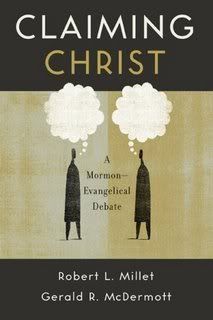
Claiming Christ: A Mormon-Evangelical Debate

Robert L. Millet (Professor of Ancient Scripture BYU) and Gerald R. McDermott (Professor of Religion Roanoke College) co-authored a new book entitled Claiming Christ: A Mormon-Evangelical Debate. With the recent presidential candidacy of LDS Mitt Romney and former Baptist minister Mike Huckabee, there has been an increase in press coverage about the LDS church and a little antagonism between Mormons and Evangelicals. This Book by Dr. Millet and McDermott seeks to find common ground between the two faith traditions as well as respectfully discussing distinctions.

Dr. McDermott concedes that Mainstream Christianity has been falsely persecuting the LDS faith. In Dr. McDermott's view, the LDS should be rightly considered a Christian faith as they recognize Jesus Christ as God and the only way to salvation. However, he does take issue with three points of LDS doctrine concerning the relationship between God and man, creation out of nothing, and modern authorized revelation as non-Biblical.

Dr. McDermott says that it is unfair for Evangelicals to claim they hold to the principle of "sola scriptura" in all their beliefs as many Evangelical beliefs such as the Trinity and other creeds are post-Biblical interpretations. So, he concedes, like Mormons, even Evangelicals interpret the Bible through the lens of their faith tradition.

While Dr. McDermott insists that Evangelical interpretation of the Bible is more Orthodox and contextually correct than LDS interpretation, he seems to contradict himself. Dr. McDermott argues that understanding correct doctrine is important in ones ability to know Christ and receive Christ's love, receive forgiveness for sin and salvation, and apply the benefits of Christ's sacrifice generally. However, he goes on to say that while Mormons could learn from Evangelical orthodoxy (correct belief), Evangelicals could learn from Mormon orthokardia (correct heart), and orthopraxis (correct behavior). That said, if Dr. McDermott believes Evangelicals have the corner on the market on doctrine, one wonders why Evangelicals aren't the "good neighbor" examples he praises Mormons to be.

Dr. McDermott criticized the popular Evangelical concept of "Lone Ranger worship" and "cheap grace." Both Dr. Millet and McDermott agree that salvation is based only on the grace alone of Jesus Christ's sacrifice and death and not works. But, they both concede that good works done with pure intent are then a manifestation of the Holy Ghost sanctifying the believer who has accepted Christ, who has been justified by His blood, and who has received of His love. The Bible and the Book of Momon teaches that the flesh is incapable of doing good on its own. Consequently, all good works come from the reception of Christ's love, and the inspiration of the Holy Spirit.

I think Dr. Millet could have argued stronger for the LDS views on Christ, the pre-existence, creation and modern revelation (including the Book of Mormon). He seems to concede that while the Bible can be interpreted to support all these doctrines, many are more clearly based on mainly extra-biblical sources and modern revelation. Dr. Millet seems content to present the LDS message and is happy to allow Dr. McDermott to argue with him in favor of LDS Christianity.

Dr. McDermott happily presents what he believes is the perfect Biblical parallel to explains the Mormons. He likens the LDS people to the Samaritans of the New Testament. Jesus Christ did preach among them and used them as examples of Christ-like love (parable of the Good Samaritan). Notwithstanding, the Jews considered them apostate and persecuted them. However, Dr. McDermott forgets that according to the Bible the Jews at Jerusalem were probably considered more apostate than the Samaritans.

Dr. Millet and McDermott agree in the end that both Evangelicals and LDS can pray together, and they can work together on social issues of common concern such as strengthening family and community values. While Dr. Millet said he enjoyed attending Evangelical services, Dr. McDermott seemed to discourage evangelicals from worshiping with the LDS saying that our differences in belief on God would make proper worship "impossible."

Tuesday, November 06, 2007

Restored Christianity

Time Magazine reported on Richard Land's, the head of the Southern Baptist Convention's Ethics & Religious Liberty Commission, labeling of the Church of Jesus Christ as a "Fourth Abrahamic Religion." While the SBC has previously considered the LDS faith a cult, Time author David Van Biema wasn't sure if this new "charitable" categorization was "a promotion or demotion."


What is wrong with letting the Church of Jesus Christ label ourselves. And who is the SBC that they can dictate who is Christian and who isn't. First off, we are not and never were trying to sell ourselves as Catholic, or Protestant, or Evangelical. Joseph Smith clearly categorized the LDS Church as RESTORED CHRISTIANITY. If you consider the official name of the church which was given by Jesus Christ to Joseph Smith via revelation; restoration is clearly inferred in the title. We are the Church of Jesus Christ of Latter-day Saints, a restored version of Christ's church in the latter days as opposed to the Church of Jesus Christ of Meridian-Day Saints.

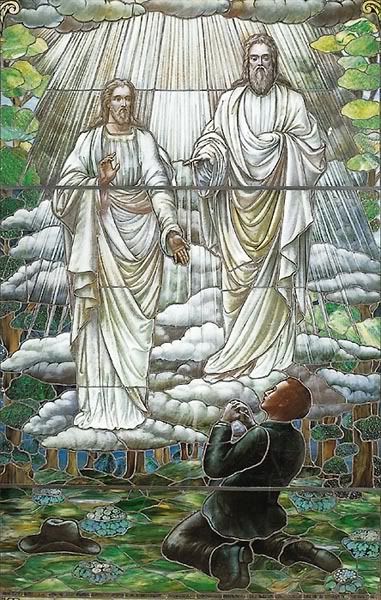
The LDS Church holds that Christ's church which he left to his 12 Apostles was removed from the Earth. While the fruit (meaning the early Saints) would remain [in God's grace] and be exalted, the kingdom itself was lost as was the priesthood authority. Consequently the Christian world fell into the Dark Ages. Then in 1820, God initiated the restoration of His kingdom to the Earth. As part of this restoration there was a restoration of priesthood keys, prophets, Apostles, ordinances, covenants, new scripture, revelations, miracles, and temples. God's kingdom on Earth is now known as the Church of Jesus Christ of Latter-day Saints.
Now is there Biblical precedent to support such a claim of apostasy necessitating restoration? Yes! Consider Adam, Enoch, and Abraham-- the great Patriarchs. For centuries we didn't have any of their writings. The only thing we knew of them was restored via Moses. But, while the Old Testament hints, restored revelation through Joseph Smith confirms that Adam was the first Christian and that Adam, Enoch, Melchizedek, and Abraham were all Christian and practiced a very similar religion that members of the LDS church practice today except for the replacement of animal sacrifice which foreshadowed Christ's atonement for the Lord's Supper as a commemoration of his death and atonement. So, it can be said that the LDS church is also a restoration of the original Abrahamic religion as well as a restoration of the original Christian religion. We aren't the 4th Abrahamic religion. We are the original Abrahamic religion.
There is nothing in the Bible that says that God wouldn't prevent men from adding or subtracting from scripture despite his commandment to the contrary. God has not violated man's agency even in this instance. Despite the heroic efforts of inspired souls who have preserved what we have of it, the Bible has been left ambiguous. Consequently, the Bible alone has failed to bring us to a unity of the faith. Therefore, after the great spiritual famine prophesied by Amos and John who told of the church/woman fleeing into the wilderness to escape the dragon that there would need to be a great restoration of all things in this the Dispensation of the Fullness of Times. Come and see for yourself.

Saturday, October 20, 2007

Thoroughly Furnished Unto All Good Works

Jeff Robinson reports on the Southern Baptist Journal of Theology, Summer edition 2005, which is dedicated to the topic of Mormonism. In his article, published in the Baptist Press News on Sep 23, 2005, he writes that "Evangelicals often find Mormonism intriguing because of the clean lifestyle and conservative values of its adherents. Mormons may make great neighbors, but their doctrines and practices within the church appear as anything but appealing to evangelicals"

Recently, several denominational Christian Churches have come out with official doctrinal statements and resolutions stating that LDS church doctrine and practices are unorthodox, strange, or weird and not in harmony with the Bible. However, before condemning us as a heretical cult and non-Christian; these statements invariably start out praising our clean living, exemplary citizenship, and strong families. Then they warn their sheep not to be fooled by the [sheep in wolf's clothing]?

First, I cannot think of a more gracious compliment from these other faiths than to recognize the goodness and Christ-likeness of the LDS people. Chances are that you know an LDS member or family at work, school, or next door. And chances are you think they are pretty great people. But then you tell yourself that they must be the exception to the rule. I will tell you that, LDS members aren't perfect, but the reality is that your LDS neighbor or friend is only typical of most LDS members.

Now, if you give the above sheep and wolf analogy some thought you will see that it is exactly the opposite of the Bible warning (Matt. 7: 15). When the Bible teaches about false prophets in sheep's clothing, "cleansing the inner vessel" or having "clean hands and a pure heart," it is talking about the personal behavior and righteousness of the believer. The author praises LDS members for being good, honest, hardworking, family-oriented, Christ-centered on the outside but then he goes on to warn the reader to beware of their bazaar doctrines and secret temple practices on the inside? It seems the author has his analogy mixed up. When the Bible speaks of righteousness, good works, and pure religion; these aspects of true Christian worship are the fruit or outward manifestations of an inner faith and devotion to Christ and not just a facade.

Here is my point. It makes no spiritual sense to say that a person or group misunderstands correct Christian doctrine and scripture but on the other hand are exemplary in terms of their moral living, family values, citizenship, and Christ-like example. According to the Bible, the whole point of doctrine and scripture in the first place is to teach you how to behave and believe and act in away that God approves of. A person cannot be Christ-like if he does not know Christ.
James 1: 27 Pure religion and undefiled before God and the Father is this, To visit the fatherless and widows in their affliction, and to keep himself unspotted from the world.
2 Tim. 3: 17 That the man of God may be perfect, throughly furnished unto all good works.
1 Tim. 1: 5 Now the end of the commandment is charity out of a pure heart, and of a good conscience, and of faith unfeigned:
John 13: 35 By this shall all men know that ye are my disciples, if ye have love one to another.
Matt. 7: 16, 20 Ye shall know them by their fruits
1 Cor. 13: 8 Charity never faileth: but whether there be prophecies, they shall fail; whether there be tongues, they shall cease; whether there be knowledge, it shall vanish away.

Unfortunately, many evangelical Christians do not recognize the importance of correct Christian doctrine because there exists such a disunity of doctrine even within churches of the same denomination in the same city. Most of my friends and colleagues tell me that it doesn't matter much what the exact doctrines are, so long as they worship Christ and study from the Bible. LDS members do not hold such a casual attitude with regard to doctrine. The LDS Church has a unified doctrine. Anywhere you go in the world, any LDS church you attend, you will hear the exact same doctrine taught and religion practiced.

Now I hope I don't have to convince you that doctrine matters. Pick a doctrine and I will give you an example of someone who excused themselves in sin, or made an incorrect choice because they did not understand the fundamentals of Christian discipleship. That doctrine does matter is the foundation assumption of these many recent doctrinal resolutions passed by the denominational Christian religions.

The point is that one of many reasons I am a member of the Church of Jesus Christ is because I feel more "thoroughly furnished unto all good works." The LDS church helps me be a better husband, a better father, a better neighbor, and a better disciple of Christ. The LDS church helps my family be stronger, more unified and more Christ-centered. Stats support that active LDS members and families are wealthier , are more educated, have much less divorce, live longer, have a lower rate of teen pregnancy, and give more to charity than active members of any other Christian denomination. So, despite our seemingly weird and wolfish doctrine, we really are Christ's sheep inside and out.

Also, the LDS Church has a far more developed culture of caring than any other religious organization. As an LDS member, I know that my and families spiritual and temporal needs will be cared for until death and beyond. Unfortunately, many of my religious friends have lamented at how poorly their church responds to individual crisis. In the LDS church, we really do take care of each other.

Doctrinally speaking, Other Christian Churches call us a non-Christian, unorthodox, religious cult because of our rejection of what we consider to be a heretical 3rd-century AD doctrine on the trinity which was fabricated in 325AD at the 1st ecumenical council of the Catholic Church. First off, the world trinity is not found anywhere in the Bible. LDS believe in the GodHead, which is found in the Bible (Acts 17: 29, Rom. 1: 20, Col. 2: 9). The GodHead comprises God the Father, The Son Jesus Christ, and The Holy Ghost who are 3 distinct entities with glorified bodies (Acts 7: 55-56), parts (Rev. 4: 2), and righteous passions (John 3: 16); but are knowable (1 Jn. 4: 7)(John 17: 2-3), and comprehensible through the Holy Spirit (1 Cor. 2: 11), and who are one in purpose (John 17: 11, 22).

All LDS doctrines including the temple are clearly supported by the Bible and by modern revelation by prophets and apostles which is also Biblical. Also, the LDS church is not and never was trying to pass ourselves off as evangelical or protestant. Joseph Smith taught that our faith and religion should be considered Restored Christianity. Our doctrine is more in-line with 1st Century Christianity than the later corrupted 3rd -century version. But if the other Christian denominations insist on excluding us from being considered Christian, at least they recognize us for being Christ-like which is what really matters.


Thursday, October 26, 2006

Recipe for Anti-Mormon Literature

A Christian friend of mine is investigating the Book of Mormon and the Church of Jesus Christ of Latter-day Saints. During this process he has come into procession of an article by a non-LDS preacher which, on the surface, seeks to explain the doctrines and beliefs of the LDS Church. I asked my friend if he thought the article was unbiased. My friend responded “yes” because the article praises Mormons for being honest, hardworking, righteous, family- and community-minded people. But, when it came to explaining what Mormon’s supposedly believe, the article brought up esoteric doctrines such as “blood atonement” and “Adam-god theory.”

My friend made an excellent point with regard to what he had read. He said, “I am concerned about joining a church that was founded on questionable foundation doctrines.” The foundation doctrines of the LDS church, then and now, have always been faith in the Lord Jesus Christ, repentance, and baptism by water and by the Holy Spirit. Joseph Smith taught masterful sermons on faith which have been compiled in a book entitled “Lectures on Faith.” Joseph Smith spoke on forgiveness and repentance and as a Prophet of God, he bore witness the Jesus is the Christ, the Son of God, the Savior of the World. He taught that the grace of Jesus Christ is the only way to salvation and eternal life. This is the foundation doctrine of the church.

Now where do these other funny topics come from? Mormons believe in being “a record keeping people.” Consequently, the LDS church has made an effort to record and catalog almost every talk, discourse, article, and sermon by its church leaders. Every single one. Consequently, enemies of the church have spent considerable effort to search through church archives and come upon a talk, here or there, that may address a speculative or esoteric topic. Then they write a misleading article which falsely presents these subjects as founding LDS doctrines.

The typical recipe for an anti-Mormon article is to start out by saying, “Mormons are seemingly such God-fearing, righteous, family-oriented people.” But then it will say, “But don’t let that fool you. It’s all a crafty facade; a diabolical ruse.” “Look at all these strange and mystical doctrines that they believe in, they are occult, they are not based on the teachings of the Bible.” They then go on to say, “no Mormons follow the Bible because if they ever did they would never be Mormon.” The whole point of the article, obviously, is to discourage the reader from further investigation on of the church.

In response to this article, I reminded my friend what the aim of the article was discouragement. I answered all of his questions from the Bible. I didn’t change the subject or ignore any his concerns. And I encouraged him to continue to learn about the true foundation doctrines of the Church from the missionaries, by attending church, and by reading the scriptures. The Bible teaches, “if any man will do his will, he shall know of the doctrine, whether it is of God, or I speak of myself.”

I have encouraged my friend that after he has searched the scriptures, and studied it out in his mind. That he would ask God the Eternal Father in the name of Christ if the LDS Church is true, if the Book of Mormon is scripture like the Bible, and if Joseph Smith was a true prophet. The Bible warns us to not “trust in the arm of flesh” but “if any seek wisdom, let him ask of God.”

I am concerned that such anti-Mormon literature would discourage my friend and others from praying and asking God if these things are true. The Book of Mormon states, “For if ye would hearken unto the Spirit which teacheth a man to pray ye would know that ye must pray; for the evil spirit teacheth not a man to pray, but teacheth him that he must not pray. But behold, I say unto you that ye must pray always, and not faint” (2Ne 32:8).

Also, remember that the Bible teaches that “false prophets” would arise in the last days but, “by their fruits, ye shall know them.” I think it a great compliment that most anti-Mormon literature always begins by extolling Mormon faith, righteousness, and family values. Sounds like the wonderful fruit of Christian gospel living to me.