Sunday, June 17, 2007

The Principle of Service
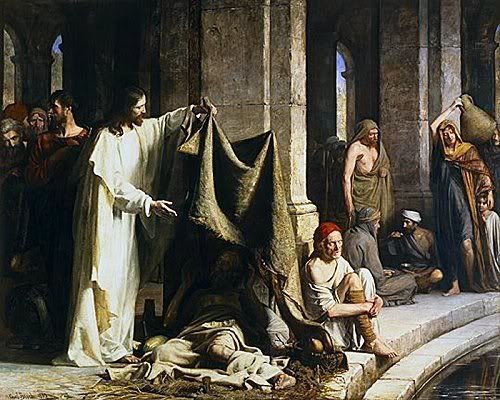
Today in Gospel Essentials (Sunday School) our class discussed the principle of service.

John 17: 2-3 And this is life eternal, that they might know thee the only true God, and Jesus Christ, whom thou hast sent.

The greatest gift of God and the highest hope of mankind is the promise of immortality, salvation, exaltation and eternal life. John in the New Testament defines Eternal Life as coming to know God and Jesus Christ. But how can a man "know" God? Is he "unknowable?"

John 14: 6-9 Jesus saith unto him, I am the way, the truth, and the life: no man cometh unto the Father, but by me. If ye had known me, ye should have known my Father also: and from henceforth ye know him, and have seen him. Philip saith unto him, Lord, shew us the Father, and it sufficeth us. Jesus saith unto him, Have I been so long time with you, and yet hast thou not known me, Philip? he that hath seen me hath seen the Father;

Jesus Christ was sent to Earth to reveal unto man the nature of God. If we come to know Christ then we will know the Father and inherit eternal life. But how do we come to know Christ?

Mosiah 5: 13 For how knoweth a man the master whom he has not served, and who is a stranger unto him, and is far from the thoughts and intents of his heart?

King Benjamin taught the Nephites that we can know Christ through serving him. But Christ has gained eternal life himself and has inherited all the father hath. So, what do you give someone who has everything. Well, there is one thing in this universe which God organized which was co-existent with God, which God does not own, and which God prizes more than anything. What God prizes more than anything else is the souls of men.

D&C 18: 10 Remember the worth of souls is great in the sight of God;


So great is the worth of souls to God that by serving our fellow man we are serving God. Jesus Christ in the New Testament and King Benjamin in the Book of Mormon taught that we can best serve God by serving others.

Matt. 25: 33-45 And he shall set the sheep on his right hand, but the goats on the left. Then shall the King say unto them on his aright hand, Come, ye blessed of my Father, inherit the kingdom prepared for you from the foundation of the world: For I was an hungred, and ye gave me meat: I was thirsty, and ye gave me drink: I was a stranger, and ye took me in: Naked, and ye clothed me: I was sick, and ye visited me: I was in prison, and ye came unto me. Then shall the righteous answer him, saying, Lord, when saw we thee an hungred, and fed thee? or thirsty, and gave thee drink? When saw we thee a stranger, and took thee in? or naked, and clothed thee? Or when saw we thee sick, or in prison, and came unto thee? And the King shall answer and say unto them, Verily I say unto you, Inasmuch as ye have done it unto one of the least of these my brethren, ye have done it unto me.

Mosiah 2: 12-19 I say unto you that as I have been suffered to spend my days in your service. . . And even I, myself, have labored with mine own hands that I might serve you. . . And behold, I tell you these things that ye may learn wisdom; that ye may learn that when ye are in the service of your fellow beings ye are only in the service of your God. Behold, ye have called me your king; and if I, whom ye call your king, do labor to serve you, then ought not ye to labor to serve one another? And behold also, if I, whom ye call your king, who has spent his days in your service, and yet has been in the service of God, do merit any thanks from you, O how you ought to thank your heavenly King!

To the true christian disciple, Christ is the great Examplar. Christ was sent to not only tell what God is like, but also show us what God is like. Christ showed us how to become "fishers of men" and how to serve our fellow man. Christ then commanded his disciples to do those things we have seen him do just has Christ had done those things he had seen the Father do.

3 Ne. 27: 21, 27 Verily, verily, I say unto you, this is my gospel; and ye know the things that ye must do in my church; for the works which ye have seen me do that shall ye also do; for that which ye have seen me do even that shall ye do;. . . And know ye that ye shall be judges of this people, according to the judgment which I shall give unto you, which shall be just. Therefore, what manner of men ought ye to be? Verily I say unto you, even as I am.

Christ taught that all men are created equal. He was criticized for associating with sinners and women. Christ showed by example that God is no respecter of persons because everyone is created a spirit son or daughter of God.

Mark 2: 16-17 And when the scribes and Pharisees saw him eat with publicans and sinners, they said unto his disciples, How is it that he eateth and drinketh with publicans and sinners? When Jesus heard it, he saith unto them, They that are whole have no need of the physician, but they that are sick: I came not to call the righteous, but sinners to repentance.

Christ also taught that we should do good in secret. We shouldn't serve others for the recognition of the deed. The best service is done anonymously. Also, the scriptures teach that we are not expected to do more than we are able. Christ taught Joseph Smith that "unto whom much is given, much is expected." But if we cannot give because of our circumstance, King Benjamin taught that we should have the attitude, "but if I had, I would give." Christ taught Joseph Smith that we should all be "anxiously engaged" in doing good and not wait to feel specifically inspired. We should be looking to do good always and as we initiate goodness of our own free agency, the inspiration and blessings of heaven will follow to help us.

Matt 6: 1-4 Take heed that ye do not your alms before men, to be seen of them: otherwise ye have no reward of your Father which is in heaven. Therefore when thou doest thine alms, do not sound a trumpet before thee, as the hypocrites do in the synagogues and in the streets, that they may have glory of men. Verily I say unto you, They have their reward. But when thou doest alms, let not thy left hand know what thy right hand doeth: That thine alms may be in secret: and thy Father which seeth in secret himself shall reward thee openly.

D&C 82: 3 For of him unto whom much is given much is required; and he who sins against the greater light shall receive the greater condemnation.

Mosiah 4: 24 And again, I say unto the poor, ye who have not and yet have sufficient, that ye remain from day to day; I mean all you who deny the beggar, because ye have not; I would that ye say in your hearts that: I give not because I have not, but if I had I would give.

Mosiah 4: 27 And see that all these things are done in wisdom and order; for it is not requisite that a man should run faster than he has strength. And again, it is expedient that he should be diligent, that thereby he might win the prize; therefore, all things must be done in order.

D&C 58: 27 Verily I say, men should be anxiously engaged in a good cause, and do many things of their own free will, and bring to pass much righteousness;

Christ also taught that we should allow others to serve us. On two occasions, a woman annoints Christ's feet and later his head and body. In the first instance, a pharisee objects because the woman was a sinner. In the second, the disciples object because of the expensiveness of the ointment. Christ rebukes these critics and blesses the women for their deeds. In the same way we should allow others to serve us so that God can bless them through their service.

Matt 26: 6-11 Now when Jesus was in Bethany, in the house of Simon the leper, There came unto him a woman having an alabaster box of very precious aointment, and poured it on his head, as he sat at meat. But when his disciples saw it, they had indignation, saying, To what purpose is this waste? For this ointment might have been sold for much, and given to the poor. When Jesus understood it, he said unto them, Why trouble ye the woman? for she hath awrought a good work upon me. For ye have the poor always with you; but me ye have not always.

By going through the motions of proper service and involving Christ through prayer, the scriptures promise that we will be filled with charity which is the pure love of Christ. Then, at our death or the second comming of Christ when we stand before him to be judged of our deeds, Christ promises us that we will "love his appearing" because we will "be like him." And we can look forward to the words "Well done, thou good and faithful servant: thou hast been faithful over a few things, I will make thee ruler over many things: enter thou into the joy of thy lord" (Matt. 25: 21).

Moro. 7: 48 Wherefore, my beloved brethren, pray unto the Father with all the energy of heart, that ye may be filled with this love, which he hath bestowed upon all who are true followers of his Son, Jesus Christ; that ye may become the sons of God; that when he shall appear we shall cbe like him, for we shall see him as he is; that we may have this hope; that we may be purified even as he is pure. Amen.
Sunday, June 10, 2007

The Principle of Work

Today in Gospel Essentials in Sunday School, our class talked about the principle of work.

The 4th Commandment given by God to Moses on Mount Sinai addresses Sabbath day observance. However, many people forget about the the second part of the commandment. The commandment reads, "Remember the sabbath day, to keep it holy. Six days shalt thou labour, and do all thy work:" (Ex. 20: 9). Most everyone remembers the resting part. But, I rarely even hear mention of the "Six days shalt thou labour." It usually gets dropped when the commandments are summarized.

We are saved by Grace, no question; but, work is an important principle of the Gospel. In the garden of Eden, God told Adam that "cursed is the ground for thy sake; in sorrow shalt thou eat of it all the days of thy life; thorns also and thistles shall it bring forth to thee; and thou shalt eat the herb of the field; In the sweat of thy face shalt thou eat bread," (Gen. 3: 19). When people read the "cursed is the ground for they sake" they usually think God is being vindictive. However, I like to read it this way; "cursed is the ground for thy [benefit]. From the beginning Adam was commanded to work hard for his maintenance and to provide for the temporal needs of his family.

Why is work so important? Paul wrote to Timothy that God expects us to be temporally self- reliant and each member, despite living with "all things in common," fathers have the primary responsibility to care for the needs of their own family: "But if any provide not for his own, and specially for those of his own house, he hath denied the faith, and is worse than an infidel" (1 Tim. 5: 8).

The principle of work is first and best taught in the home. Children learn in the household that they can share in the responsibility for its maintenance. They can learn through chores somewhat of the effort required which made the comforts and conveniences of home possible. A farmer had 5 sons and when they were old enough he purchased a heard of milk cows. All 5 boys awoke early every day to milk and care for the animals. Then after all the boys had left home for college the father sold the cows. Upon learning of the sale the boys asked why their Dad would sell the cows after they had cared for them so many years. The wise father replied, "I didn't buy to the cows to raise cows, I bought the cows to raise boys."

The principle of teaching children to work is supported by Erik Erickson's (1902-1994) theory of psychosocial development. This theory states that children pass through stages of development. However, each subsequent stage is dependent on the one before it. Infants are in the first stage of Trust. In this stage, parents need to care for all the needs of their child. By getting their needs cared for completely, infants learn to trust the world. They learn that their world is a friendly, safe, and good place. Next, toddlers enter the stage of Autonomy. In this stage, toddlers want to do everything themselves even though in many instances they can't. It is important for parents to encourage toddlers to find aspects of a task that they can do and then help them complete the rest of the task. Preschoolers enter the Initiative stage. In this stage children learn to do initiate activities on their own. Young children learn to use their imagination and decide for themselves what things they like and want to play. Elementary school children enter into a stage of Industry. In this stage, children learn that they can learn. School-aged children learn that if they put forth the required effort, they can develop many skills such as reading, jumping rope, playing soccer, etc. Adolescents enter the stage of Identity. High-school-aged children are tying to find out what talents and interests they have and begin develop these. This is the stage where a person is beginning to ask the question, "who am I" and "where do I fit into the world?" Young Adults then enter into the Intimacy stage of psychosocial development. In this stage, children learn that talents and interests are much more enjoyable when they are shared with someone else. This is the time when individuals start seriously looking for a spouse and to start a family.


Why is this important? It's important because if you don't teach a child how to work during the Autonomy, Initiative, and Industry stage of development, then they are more likely to have problems during the Identity and Intimacy stage. All of these difficulties are likely to negatively affect marriage and family.

The principle of work is not only physical, but spiritual also. The scriptures are filled with scriptures that teach the importance of work:

Matt. 7: 21 / Luke 6: 46 / John 14: 15 / Acts 2: 38 / James 2: 14, 17 / Philip. 2: 12 / Gal. 6: 2

James 1: 22 / 1 Jn. 2: 17 /D&C 58: 27

Now there are a very many churches that criticize work. These religious socialists who teach that Christ's grace will do all, seem to have created a false dichotomy between faith and works. There is no fight between faith and works. The two principles work perfectly together without challenging God's power to save and exalt man. God gave us breath and physical arms and legs to do good (Mosiah 2: 21). He also gave us spiritual arms and legs through prayer, repentance, scripture study, and the ordinances of baptism, the sacrament, and the temple. It is no slight against God's power to use those gifts he has given us by grace (D&C 88: 33).

But what of Paul's words?

Gal. 2: 16, 21 Knowing that a man is not justified by the works of the law, but by the faith of Jesus Christ, even we have believed in Jesus Christ, that we might be justified by the faith of Christ, and not by the works of the law: for by the works of the law shall no flesh be justified.
Paul is addressing the Jewdizers in the early Christian church who believed that new Christian converts first had to be circumcised and become Jews before they were baptized Christian. Paul disagreed and rightly taught that the law (Law of Moses) did not save, but having faith in Christ and doing the things Christ taught saves. Paul at the end of this letter calls this fulfilling the "law of Christ" (Gal. 6: 2). Of course, going through the motions doesn't do any good without being filled with the love of Christ. But that doesn't mean that the motions are not necessary. It is through these motions of repentance and baptism and taking the sacrament and working with Christ as our working partner that we are filled with Christ's love. Our ability to repent, which is a life-long process, is given to us by Christ's grace. The Book of Mormon teaches how grace and work, work perfectly together.

Moro. 10: 32 Yea, come unto Christ, and be perfected in him, and deny yourselves of all ungodliness; and if ye shall deny yourselves of all ungodliness, and love God with all your might, mind and strength, then is his grace sufficient for you, that by his grace ye may be perfect in Christ; and if by the grace of God ye are perfect in Christ, ye can in nowise deny the power of God.

2 Ne. 25: 23 For we labor diligently to write, to persuade our children, and also our brethren, to believe in Christ, and to be reconciled to God; for we know that it is by grace that we are saved, after all we can do.
James tells us that we show our faith in Christ by our works. I liken James message to seat belts in a car. We can swear up and down that we believe that seat belts will save us in a car accident. But is talking about seat belts good enough if we don't actually wear them each time we drive in a car? We show our faith in Christ, just like in seat belts, by following His example and keeping his word. Of coarse, no one is perfect, and all fall short of the glory of God. But, if we have shown forth faith by trying to keep his word, and do good works, and endure to the end, then his grace will be sufficient for us. Simply put, God expects us to both talk-the-talk and walk-the-walk in Christ.
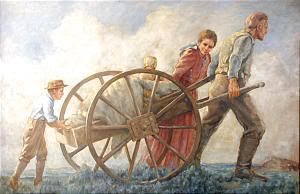
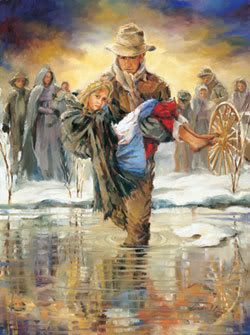
When Brigham Young received word that the Martin and Willie Handcart companies were stranded in a snow storm while crossing Wyoming's wind-river mountains.; he stood before the church and admonished the Saints that if they didn't put into practice the very principles he was teaching that all the prayer and fasting they could do wouldn't save a single soul of them in the Kingdom of God. The principle was that what those suffering and dying saints needed wasn't prayer and fasting. What they needed was an organized group of rescuers to get off their duffs, go out and get them and bring them there. This is no slander against grace. God simply expects us to use those gifts and grace which he has already given us.

Friday, June 08, 2007

Thursday, June 07, 2007

Priesthood Ban: The Last Shall Be First

This post contains thoughts related to a post on By Common Consent. In 1969, the First Presidency issued a letter on the preisthood ban which is considered by many to most closely refect the view of the LDS church on this matter. (see below)

This First-Presidency statement on the priesthood ban make the following points. The LDS church has always favored civil rights for blacks. The church maintains it's historical abolisionist, anti-slavery position. The LDS church believes that the priesthood ban was God’s will, came through revelation and was taught by Joseph Smith. However, God did not reveal the reason for the ban. According to God's will, the church maintained the ban and considered such action to be it's first amendment right. Yet at the same time, the First Presidency made it clear that blacks are spirit children of God, and descendants of Adam and Eve and that members should continue to pray that the ban would one day be lifted and suggests that the ban will only be temporary and eventually the blessings of the priesthood and temple would be available to everyone. This also suggests that many if not all the President's of the church have continually prayed that the ban would be lifted.

Despite this letter, Elder McConkie and others continued to speculate and justify the ban though a racial interpretation of scripture. Their assumption was that Joseph Smith and Brigham Young were inspired to institute the policy. So, they interpreted the Bible to explain why such a racist policy would be heavenly justified. That lead them to racially interpret passages of scriptures which spoke of the "noble and great" in the pre-existence. They also adopted southern christian interpetations which were used historically to justify slavery which had to do with descendancy theories through Cain and Ham. This kind of reasoning led to some rather unfortunate opinions and statements.

However, after the ban was lifted, Elder McConkie in August of 1978 said, "Forget everything I have said, or what...Brigham Young...or whomsoever has said...that is contrary to the present revelation. We spoke with a limited understanding and without the light and knowledge that now has come into the world." This statement is not saying that Elder McConkie believes the original ban was not inspired. This quote serves as a statement of retraction by Elder McConkie's for previous arguments which speculated about the ban and attempted to scripturally support the church's policy. However, Elder McConkie confesses all these arguments were wrong. Therefore, I feel no need do defend them; as they do not represent Mormon Doctrine.

Despite this example of the inherent dangers of speculation, I believe the ban was inspired and temporarily necessary. The reason the ban may have been temporarily necessary was not because God is racist, or the prophet; but I may have been simply because the individual members in the chruch were racist. And our racism inside and outside the church may have severly limited the reach of the church.

Had the gospel been preached to the slaves and in Africa from the beginning, those humble, spiritual people would have joined immediately. Unfortunately, my racist ancestors then would never had joined the church. Therefore, like Christ teaching to the bigoted Jews first and then to the Gentiles, the gospel was to go the the more bigoted Gentiles first and then to the rest of the house of Israel. "The first shall be last and the last shall be first" and "Ephraim shall not envy Judah and Judah shall not vex Ephraim."

The learned racism within the individual members of the church would have had other grave consequences. I imagine that many of our prayers in the temple would have been more ineffectual because the spirit of the Lord would have been restrained due to a greater level of unkind and racial feelings.

That said, the ban is now lifted and the church is no longer under condemnation and our prayers inside and outside the temple are much more effectual now then ever before. Since God has seen in his wisdom that his church was ready for the ban to be revoked I have witnessed the the windows of heaven opening up and showering blessings from heaven upon his church. Thank Our Heavenly Father the ban is lifted.


December 15, 1969

To General Authorities, Regional Representatives of the Twelve, Stake Presidents, Mission Presidents, and Bishops.

Dear Brethren:

In view of confusion that has arisen, it was decided at a meeting of the First Presidency and the Quorum of the Twelve to restate the position of the Church with regard to the Negro both in society and in the Church.First, may we say that we know something of the sufferings of those who are discriminated against in a denial of their civil rights and Constitutional privileges. Our early history as a church is a tragic story of persecution and oppression. Our people repeatedly were denied the protection of the law. They were driven and plundered, robbed and murdered by mobs, who in many instances were aided and abetted by those sworn to uphold the law. We as a people have experienced the bitter fruits of civil discrimination and mob violence.

We believe that the Constitution of the United States was divinely inspired, that it was produced by “wise men” whom God raised up for this “very purpose,” and that the principles embodied in the Constitution are so fundamental and important that, if possible, they should be extended “for the rights and protection” of all mankind.In revelations received by the first prophet of the Church in this dispensation, Joseph Smith (1805-1844), the Lord made it clear that it is “not right that any man should be in bondage one to another.” These words were spoken prior to the Civil War. From these and other revelations have sprung the Church’s deep and historic concern with man’s free agency and our commitment to the sacred principles of the Constitution.

It follows, therefore, that we believe the Negro, as well as those of other races, should have his full Constitutional privileges as a member of society, and we hope that members of the Church everywhere will do their part as citizens to see that these rights are held inviolate. Each citizen must have equal opportunities and protection under the law with reference to civil rights.

However, matters of faith, conscience, and theology are not within the purview of the civil law. The first amendment to the Constitution specifically provides that “Congress shall make no law respecting an establishment of religion, or prohibiting the free exercise thereof.”The position of the Church of Jesus Christ of Latter-day Saints affecting those of the Negro race who choose to join the Church falls wholly within the category of religion. It has no bearing upon matters of civil rights. In no case or degree does it deny to the Negro his full privileges as a citizen of the nation.

This position has no relevancy whatever to those who do not wish to join the Church. Those individuals, we suppose, do not believe in the divine origin and nature of the church, nor that we have the priesthood of God. Therefore, if they feel we have no priesthood, they should have no concern with any aspect of our theology on priesthood so long as that theology does not deny any man his Constitutional privileges.

A word of explanation concerning the position of the Church. The Church of Jesus Christ of Latter-day Saints owes its origin, its existence, and its hope for the future to the principle of continuous revelation. “We believe all that God has revealed, all that He does now reveal, and we believe that He will yet reveal many great and important things pertaining to the Kingdom of God.”From the beginning of this dispensation, Joseph Smith and all succeeding presidents of the Church have taught that Negroes, while spirit children of a common Father, and the progeny of our earthly parents Adam and Eve, were not yet to receive the priesthood, for reasons which we believe are known to God, but which He has not made fully known to man.

Our living prophet, President David O. McKay, has said, “The seeming discrimination by the Church toward the Negro is not something which originated with man; but goes back into the beginning with God….“Revelation assures us that this plan antedates man’s mortal existence, extending back to man’s pre-existent state.”

President McKay has also said, “Sometime in God’s eternal plan, the Negro will be given the right to hold the priesthood.”

Until God reveals His will in this matter, to him whom we sustain as a prophet, we are bound by that same will. Priesthood, when it is conferred on any man comes as a blessing from God, not of men.

We feel nothing but love, compassion, and the deepest appreciation for the rich talents, endowments, and the earnest strivings of our Negro brothers and sisters. We are eager to share with men of all races the blessings of the Gospel. We have no racially-segregated congregations.Were we the leaders of an enterprise created by ourselves and operated only according to our own earthly wisdom, it would be a simple thing to act according to popular will. But we believe that this work is directed by God and that the conferring of the priesthood must await His revelation. To do otherwise would be to deny the very premise on which the Church is established.

We recognize that those who do not accept the principle of modern revelation may oppose our point of view. We repeat that such would not wish for membership in the Church, and therefore the question of priesthood should hold no interest for them. Without prejudice they should grant us the privilege afforded under the Constitution to exercise our chosen form of religion just as we must grant all others a similar privilege. They must recognize that the question of bestowing or withholding priesthood in the Church is a matter of religion and not a matter of Constitutional right.We extend the hand of friendship to men everywhere and the hand of fellowship to all who wish to join the Church and partake of the many rewarding opportunities to be found therein.

We join with those throughout the world who pray that all of the blessings of the gospel of Jesus Christ may in due time of the Lord become available to men of faith everywhere. Until that time comes we must trust in God, in His wisdom and in His tender mercy.Meanwhile we must strive harder to emulate His Son, the Lord Jesus Christ, whose new commandment it was that we should love one another. In developing that love and concern for one another, while awaiting revelations yet to come, let us hope that with respect to these religious differences, we may gain reinforcement for understanding and appreciation for such differences. They challenge our common similarities, as children of one Father, to enlarge the out-reachings of our divine souls.

Faithfully your brethren,The First Presidency

Tuesday, June 05, 2007

Prehistoric Chicken Bones: Possible Evidence for the Book of Mormon?

New Scientist.com reports on a new research article printed in the Proceedings of the National Academy of Sciences. Chilean archaeologists working at the site of El Arenal-1, on the Arauco Peninsula in south-central Chile, discovered what they thought might be the first prehistoric chicken bones unearthed in the Americas. The group carbon-dated the bones and their DNA was analysed. The 50 chicken bones from at least five individual birds date from between 1321 and 1407 - 100 years or more before the arrival of Europeans. Then the group compared the El Arenal chicken DNA with chicken DNA from archaeological sites in Polynesia, the researchers found an identical match with prehistoric samples from Tonga and American Samoa, and a near identical match from Easter Island. They conclude that the Polynesians had to be the earliest explorers to visit the Americas.

However, the Book of Mormon hints that groups from the Book of Mormon may have settled Polynesia. The article points out that South American DNA does not correspond to Polynesian DNA. But that may mean Nephite and Mulekite DNA has been completely diluted out by other groups. Dilution may also explain why American Indian DNA was found to not correspond with Hebrew DNA.