Wednesday, November 12, 2008

Clement and Church Hierarchy
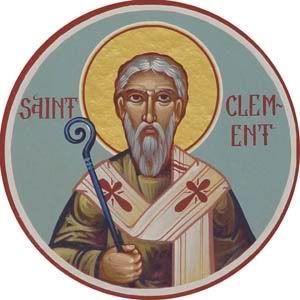
In reaction to what some saw as a corrupt and apostate hierarchy of the Catholic church, many Protestant Reformers began to interpret the bible to mean that there was not to be any hierarchy in Christ's church. Consequently, many Evangelical and Protestant churches are locally owned and controlled. In many cases, the governing Elders elect their pastor or bishop. This belief was based on the truth that every member has access to the Holy Ghost and a personal relationship with God (which is true). However, if the majority of Elders did not approve of the teaching or conduct of their pastor then they can vote him out and that vote would represent the inspired will of God.

While the New Testament is not clear on many aspects with regard to the operation of the Christian Church, there are some details found in writings from several 1st-Century Early Christian Fathers which provides additional reliable information on the organization and operation of the church.

Clement was appointed by the Apostles to be the Bishop of Rome after the martyrdom of Peter. Clement knew the Apostles personally and visa versa. In fact, Clement is mentioned specifically by Paul in Philip. 4:3 as being written "in the Book of Life." Clement is considered to be the fourth Pope of the Catholic church. Although there is no evidence from his or other's writings that his authority as Bishop or Rome exceeded that of the other Bishops or Presbyters.

How do the LDS view Clement. Clements writings are not considered scripture. But modern Apostles have said that LDS doctrine is reflective of 1st-Century Christian doctrine as opposed to 3rd-Century Christian doctrine just before the Ecumenical Councils of the Catholic Church attempted to establish a uniform doctrine for all Christians through a series of scholarly meetings, doctrinal debates, and voting. Unfortunately, this doctrine by committee, and enforcement by the sword, failed to unify the Christian Church. While few Christian writings exist from the 1st-Century, those from Bishop Clement of Rome, Bishop Ignasias of Antioch, and Bishop Polycarp of Smyrna are well respected by LDS General Authorities.

In the first surviving epistle from Clement, Bishop Clement writes the Corinthians to express his shock that they had removed their leaders. His words on the matter shed light on how the original Christian church operated with respect to the appointment of local leadership. Clement begins his epistle:

1 Clement 1 "and especially to that shameful and detestable sedition, utterly abhorrent to the elect of God, which a few rash and self-confident persons have kindled to such a pitch of frenzy, that your venerable and illustrious name, worthy to be universally loved, has suffered grievous injury"

1 Clement 46:9. “Your schism has turned aside many, has cast many into discouragement, many to doubt, all of us to grief, and your sedition continues.”

This situation reminds me of the words of John, who wrote in a similar letter concerning Diotrephes who had usurped control of one of the Christian churches against the will of the Apostles:

3 John 1:9-10 "I wrote unto the church: but Diotrephes, who loveth to have the preeminence among them, receiveth us not. Wherefore, if I come, I will remember his deeds which he doeth, prating against us with malicious words: and not content therewith, neither doth he himself receive the brethren, and forbiddeth them that would, and casteth them out of the church."

So, here we see an example of the hierarchy in operation from the New Testament itself. John an Apostle, is criticizing a local church and a leader but praising others he considers better and says he will settle things further when he arrives in person.

Clement provides even more detail in a similar situation in the church in Corinth:

1 Clement 44 Our apostles also knew, through our Lord Jesus Christ, and there would be strife on account of the office of the episcopate. For this reason, therefore, inasmuch as they had obtained a perfect fore-knowledge of this, they appointed those [ministers] already mentioned, and afterwards gave instructions, that when these should fall asleep, other approved men should succeed them in their ministry. We are of opinion, therefore, that those appointed by them, or afterwards by other eminent men, with the consent of the whole Church, and who have blame-lessly served the flock of Christ in a humble, peaceable, and disinterested spirit, and have for a long time possessed the good opinion of all, cannot be justly dismissed from the ministry. For our sin will not be small, if we eject from the episcopate those who have blamelessly and holily fulfilled its duties. Blessed are those presbyters who, having finished their course before now, have obtained a fruitful and perfect departure [from this world]; for they have no fear lest any one deprive them of the place now appointed them. But we see that ye have removed some men of excellent behaviour from the ministry, which they fulfilled blamelessly and with honour.

Here we see Clement criticizing the Elders at Corinth for unjustly removing their bishop. But according to some evangelical understanding, the council of Elders should have every right to do so. But it seems clear from 1 Clement 44 that that kind of thing is contrary to the organization of the body of Christ which analogy itself suggests hierarchy. In a hierarchy, leadership is appointed from the top down and not voted upon from the bottom up. A man is selected from among the Elders and that appointment is then ratified by the "consent of the whole church" according to Clement and not just the council of Elders.

Clement reminds those at Corinth that the Apostles foresaw that there would be strife over the calling of pastor or bishop. Who would be contending over this issue? The local membership would be. Therefore, the Apostles appointed the Bishops. This was the appointed and approved ministry. Not an elected ministry. And after the death of the Bishop, others would be approved and appointed by them (the Apostles) or other eminent men (in the hierarchy) as opposed to being elected by the Elders. Then those appointed Bishops should be ratified by the consent of the whole church. Clement didn't say anything about a council of Elders but chastised the membership for removing their Bishop not for sin, but most likely over doctrinal issues. And here we see the great apostasy develop.

Now upon reading this, an Evangelical friend of mine sent we a link to some literature which explained an Evangelical view on church authority and hierarchy:
http://interimpastor.net/Documents/Authority.doc

What caught my attention was the following: "Nowhere in Scripture is the church given authority over its leaders. Every passage that deals with authority in the church may be summed up with Hebrews 13:17 - Obey your leaders and submit to their authority. They keep watch over you as men who must give an account. Obey them so that their work will be a joy, not a burden, for that would be of no advantage to you."

The key is that according to this doctrinal paper, the church should never be given authority or power over its leaders. However, I know that many Evangelical churches are owned by a council of Elders and they vote their Pastor in and out. Or in other cases a pastor owns his own church. The problem with these two ecclesiastical models is both models subject the leadership to the authority of the church. How so?

In the first case where the Church is locally owned by a council of Elders and/or Deacons, the Pastor or Bishop is subjugated to the whims of the council. The creates a huge conflict of interest. Do you think that Pastor will as aggressively call his flock to repent? He won't because of the fear of offending the Elders, getting voted out, and loosing his job. So, the Pastor can't do his job in this system which is to offend and call his flock to repent and come to Christ.

The second case is as bad or worse than the first. Even though the Pastor owns the church, he really doesn't own it. The Pastor likely owns the bank mortgage on which he must make expensive monthly payments. Again, there is a significant conflict of interest here. Paying the bills depends on the tithes of the people in the church. So, again, the Pastor will fear to do his job and aggressively call his flock to repent and come to Christ for fear of offending the tithe payers upon which his livelihood depends.

In each of these arrangements the church has power over the Leadership because the Pastor doesn't want to offend the elders or tithe payers. But according to Clement the Bishop was to be appointed by the Apostles or other imminent men and not voted in. Then that appointment was to be ratified by the common consent of the "whole church". The key word here is appointed. And in this system, the Bishop was free to preach repentance and could only be removed for serious sin, but not over doctrinal disputes and preaching repentance. I mention doctrinal disputes because that is another benefit of a hierarchy is a uniformity of doctrine. A church with central leadership can interpret the word of God for the whole church and better keep the doctrine pure.

Sunday, November 02, 2008

Zion: A Temple City

During LDS General Conference this past October, several new temples were announced to be built. One of the temples to be built will be in Kansas City in Clay County adjacent to Jackson County. My wife at hearing this asked me if I thought that building the temple there was in fulfillment of the revelation that a temple would be built one day in Independence, Missouri. I said, I didn't think so. Here is why.

The temple that will be built during or just before the tribulation preceding the Second Coming of Christ will not just be a simple temple. It will be a temple city. As I have explained earlier, the concept of a temple is scalable. It begins within each individual and expands to an individual home and family, and then to a building, and then to a city, a nation, and then the whole Earth until when John in Revelations sees the Celestialized Earth, he comments, "there is no temple there." That is because there are no temples in Heaven. There are no places set aside as clean and holy. Heaven is God's place, and the whole place is holy and pure and not just part of it.

So, before the coming of Christ, God will reveal exactly the details of what a temple city should look like. He has already begun by revealing this City Plat by Joseph Smith for the City of New Jerusalem or "The New City of Peace." First off, you will notice that the city is only 1 mile square, and each city block is 10 acres, divided into 20, 1/2-acre lots. So, if you count up all the lots it adds up to just over 1000 lots. The significance of a city with a 1000 families is that it parallels Jethro's instruction to Moses to select captains of 1000, 100, 50, and 10 for the judging and civil governance of the people.

There are 20 lots per block, and the houses on each adjacent block do not face each other. While the homes on one block are oriented east-west, the homes across the street are oriented north-south. The lots are very elongated as well. This is the genius of the design right here. What happens here is that the home is build on the front of the lot near the street, while the back yards of all the homes of the block become a large common garden area. Because of the alternating orientation of the blocks, none of the houses face other houses, but would have a spectacular view of the central garden or forested area of the adjacent block.

There are no barns or farms in the city. All farms, barns, and animals are kept outside the city to the north and south. Everyone lives in the city. This allows everyone to enjoy the blessings that come from social and cultural interaction with others. However, the city doesn't sprawl and get too big. Once the city is full, then another city is surveyed and built like it according to the same pattern in another favorable location.

The city center is said to contain 24 temples. Now these buildings are not just for church. There will be a place for worship services, but the other 23 building will be used for government, education, and commerce. Brigham Young was said to have seen this city built and noted that the building were terraced and planted with lush gardens and fish pools on the rooftops and the terraces just like the Conference Center in Salt Lake. What is interesting about this detail is that this characteristic of terraced gardens is what made the ancient city of Babylon one of the 7 wonders of the ancient world. And to those who have been to the LDS temple, there is an interesting parallel between the serpent-inspired idea of Adam covering himself with fig leaves and God later suggesting that we use that same idea to accent our white temple robes. In the same way that the "hanging gardens" were a symbol of the wicked city of Babylon, the same terraced gardens will later become a symbol of the future righteous city of Zion. However, we should remember that it is Satan who is the great impersonator and is the one who steals ideas and not God.

The 3 central acres which are reserved for the 24 temples of learning, commerce, government, and worship are symbolic of the God Head or God the Father, Jesus Christ, and the Holy Ghost which must be the center focus of any perfect society.

Melchisedek Priesthood and the Everlasting Covenant

The LDS Church has a unique perspective on Priesthood authority as compared to any other religion. What is priesthood? Priesthood is the power and authority to receive revelation for other people, to speak and to act in the name of God. God is perfect. Man is imperfect. Man cannot return to God because we would dirty the carpet. So, God has a plan to clean us up and make us presentable before we are to stand before Him and make an accounting of our lives here on Earth. So, to show us where the soap and water are and to encourage us to remember to clean behind our ears, God has called, chosen, and ordained prophets and apostles. Their words are written in the scriptures and there is a living prophet today.

How do we verify that someone who says they are a prophet and speaks for God is a prophet? Do we look for miracles and signs? No, we ask God ourselves in prayer in the name of Jesus Christ. Because although someone may claim to be speaking for God, everyone has the right to receive revelation from God for themselves. Also, what that person is saying should be in-line with what God has already revealed in the Scriptures. So, personal prayer and the scriptures serve as a check-and-balance. Also, they should say and do everything they say and do in the name of Jesus Christ, because we know that salvation comes in and through the merits and mercy alone of the Lord Jesus Christ.

Now that we know to search the scriptures and to pray to know if someone is authorized to speak and act in the name of God, that leaves getting an answer. God answers prayers by the power of the Holy Spirit. Now, it is an important skill to differentiate your own thoughts and appetites of the flesh, feelings of excitement, and temptation from the devil from communication from the Holy Spirit. But I think most people have a sense for how to do this. In simple terms, the Holy Spirit is part of your conscience. The Bible speaks of it as a "still small voice" and a "burning in the bosom" as well the "unspeakable gift." Although, it is difficult to put in to words what our conscience is or "feels" like, I think most people experience and recognize the influence of their conscience.

So, where did Priesthood begin? Some Christian denominations teach that Moses was the first person to record scripture or know anything about Christ. But the New Testament teaches something very significant. The New Testament talks about the priesthood of Moses and Aaron or the Levitical Priesthood and asks if salvation comes by the Levitical Priesthood (Heb. 7: 11). The New Testament says no, because the Law given to Moses was a preparatory law to prepare the Israelites to receive Christ. In the Law of Moses, there was a High Priest who was in charge. Paul in the New Testament calls Jesus Christ the High Priest of a new and everlasting priesthood. But when the New Testament names this priesthood authority, it doesn't make up a new name for this priesthood, but gives it the ancient title of the Melchizedek Priesthood.

Who was Melchizedek? Melchizedek was the king and High Priest of the City of Salem in the land of Canaan. Melchizedek was the guy who Abraham paid tithes to when he took up residence in Canaan. It turns out that Melchizedek and other Patriarchs before Moses knew a lot about Christ. And some of them like Enoch formed such perfect societies, that the City of Zion or the City of Enoch was taken up to heaven like Elijah.

How do we know about the Patriarchs? After Joseph Smith finished the translation of the Book of Mormon, he came across ancient papyrus that just happened to have writing on them about Abraham. They were written by Joseph in Egyptian about Abraham. While Joseph Smith was translating these documents, he learned also that Adam was the first Christian, and was baptized, and taught his children to read and write. And all the pre-flood patriarchs like Adam, Seth, Methuselah, and Enoch were very spiritually advanced people. Enoch was said to have walked with God. Now, how can you be an imperfect mortal and walk with God an not know anything about Christ? Not possible. So, it turns out that these ancient patriarchs had something special. And when it comes to Noah and Abraham, the Bible says that He will establish an everlasting covenant with them. Well this isn't the Mosaic Law or Covenant, that was temporary. This Everlasting Covenant is administered by the Melchizedek Priesthood and it is that priesthood and covenant which descended down through the Patriarchs from father to birthright son.

From the writings of Abraham in the Pearl of Great Price, we learn that Abraham recognized that Babylon was apostate. So, he left Babylon to seek out the covenants of the ancient patriarchs. God led Abraham to Salem and to Melchizedek who was a High Priest. And Melchizedek ordained Abraham a High Priest over his family with the same authority. Abraham passed that authority to Isaac and then to Jacob (Israel), who bestowed it with the coat of many colors on Joseph who was sold into Egypt.

After many years, Israel was in a state of apostasy, and there was no prophet in Israel. Moses who grew up as an adopted son of the Pharaoh, was led out of the spiritual famine and found the everlasting covenant and priesthood from Jethro, the High Priest of Midian. Jethro received his priesthood through an unbroken line through a prophet Esaias who was a contemporary of Abraham and Melchizedek. Now God had chosen and authorized Moses to be the new prophet in Israel. Moses learned from Jethro about Enoch, Abraham and Melchizedek and God wanted Moses to create the same perfect society that Enoch and Melchizedek had achieved.

God tells Moses: "Ye have seen what I did unto the Egyptians, and how I bare you on eagles’ wings, and brought you unto myself. Now therefore, if ye will obey my voice indeed, and keep my covenant, then ye shall be a peculiar treasure unto me above all people: for all the earth is mine: And ye shall be unto me a kingdom of priests, and an holy nation. These are the words which thou shalt speak unto the children of Israel" (Ex 19:4-6).

God wanted each individual in Israel to be a Abraham, an Enoch, and a Moses. God wanted to establish his everlasting covenant with each person over their family. But the people wouldn't have it. When Moses invited the men of Israel to ascend the mountain to speak with God, the people were afraid of God, and refused.

The men of Israel said: "And they said unto Moses, Speak thou with us, and we will hear: but let not God speak with us, lest we die" (Ex. 20: 19).

And then, when Moses came down from the mountain with the everlasting covenant, he found the people worshiping Aaron's golden cafe. Moses destroyed the tablets and when he went up into the mountain again and descended with a new set of tablets, Israel had demonstrated they were not ready for the higher law, but were given the preparatory Law of Moses where only the tribe of Levi and sons of Aaron were made Deacons and Priests. When Moses led the Israelites into the Land of Israel, they named their capital city, Jerusalem or "New Salem" after the perfect city established by Melchizedek.

Now when Jesus Christ came and restored the everlasting covenant and is called a High Priest after the order of Melchizedek, He passed the keys of that authority to Peter as well as the sealing power that whatever Peter sealed or loosed on Earth it would be sealed or loosed in heaven (Matt. 16: 19). And directly after that, we see Jesus and Peter, James, and John on the Mount of Transfiguration, and there appeared to them Moses and Elijah. And these prophets passed their authority and keys to Peter. And next it says that Jesus Christ gave the sealing power to bind and loose on Earth and Heaven to the Disciples. But the term disciples refers to a specific group. These disciples were the 70 elders, mentioned in Luke 10: 1, 17 who were ordained to go 2 by 2 as heralds into all the places Christ was going to visit before he got there. These are the same disciples spoken of in Matt. 18: 18 were speaking of the keys being given to the rest of the 12 Apostles and the sealing power alone being given to the Seventy.

Who were the 70 Disciples or Elders? This idea goes back to Jethro and Moses in the Bible and likely earlier. Moses was carrying the heavy responsibility of arbitrating all the disagreements between the people of Israel. When Jethro saw this He gave some inspired counsel regarding delegation:

Exodus 18:13-16 And it came to pass on the morrow, that Moses sat to judge the people: and the people stood by Moses from the morning unto the evening. And when Moses’ father in law saw all that he did to the people, he said, What is this thing that thou doest to the people? why sittest thou thyself alone, and all the people stand by thee from morning unto even? And Moses said unto his father in law, Because the people come unto me to enquire of God: When they have a matter, they come unto me; and I judge between one and another, and I do make them know the statutes of God, and his laws. And Moses’ father in law said unto him, The thing that thou doest is not good. Thou wilt surely wear away, both thou, and this people that is with thee: for this thing is too heavy for thee; thou art not able to perform it thyself alone. Hearken now unto my voice, I will give thee counsel, and God shall be with thee: Be thou for the people to God-ward, that thou mayest bring the causes unto God: And thou shalt teach them ordinances and laws, and shalt shew them the way wherein they must walk, and the work that they must do. Moreover thou shalt provide out of all the people able men, such as fear God, men of truth, hating covetousness; and place such over them, to be rulers of thousands, and rulers of hundreds, rulers of fifties, and rulers of tens: And let them judge the people at all seasons: and it shall be, that every great matter they shall bring unto thee, but every small matter they shall judge: so shall it be easier for thyself, and they shall bear the burden with thee. If thou shalt do this thing, and God command thee so, then thou shalt be able to endure, and all this people shall also go to their place in peace. So Moses hearkened to the voice of his father in law, and did all that he had said. And Moses chose able men out of all Israel, and made them heads over the people, rulers of thousands, rulers of hundreds, rulers of fifties, and rulers of tens. And they judged the people at all seasons: the hard causes they brought unto Moses, but every small matter they judged themselves.

In addition to these Judges or Captains of 1000, 100, 50, and 10; God later tells Moses to choose 70 Elders of the Levites to serve as ecclesiastical leaders (Ex. 24: 1, 9). So we see the roots of the theocracy of the perfect Society under the Everlasting Covenant of the Melchizedek Priesthood where the political and spiritual organization of the people is explained which will be finally realized when Christ comes again as King of kings and Lord of lords.

But what does this have to do with today. Because God wants to make the everlasting covenant with us. Peter said:

1 Pet. 2: 9 But ye are a chosen generation, a royal priesthood, an holy nation, a peculiar people; that ye should shew forth the praises of him who hath called you out of darkness into his marvellous light:
Heb. 13: 20 Now the God of peace, that brought again from the dead our Lord Jesus, that great shepherd of the sheep, through the blood of the everlasting covenant,

God prophesied in the Old Testament about this day, that the time would come that He would sanctify Israel and restore the temple, and establish His everlasting covenant.

Ezek. 37: 26-28 Moreover I will make a covenant of peace with them; it shall be an everlasting covenant with them: and I will place them, and multiply them, and will set my sanctuary in the midst of them for evermore. My tabernacle also shall be with them: yea, I will be their God, and they shall be my people. And the heathen shall know that I the Lord do sanctify Israel, when my sanctuary shall be in the midst of them for evermore.

And John in Revelations talks about this over and over again. This is the whole meaning of the Book of Revelations. As I have explained elsewhere, those who enter into this everlasting covenant, are those that are "sealed in their forehead" in preparation for the tribulation. They are the same group who have "overcome" and who are "dressed in a white robe" and who are made "kings and priests" unto God who is the King of king and the Lord of lords, the Most High God and the Most High Priest.

Rev. 1: 6 And hath made us kings and priests unto God and his Father; to him be glory and dominion for ever and ever. Amen.
Rev. 5: 9-10 And they sung a new song, saying, Thou art worthy to take the book, and to open the seals thereof: for thou wast slain, and hast redeemed us to God by thy blood out of every kindred, and tongue, and people, and nation; And hast made us unto our God kings and priests: and we shall reign on the earth.
Rev. 17: 14 These shall make war with the Lamb, and the Lamb shall overcome them: for he is Lord of lords, and King of kings: and they that are with him are called, and chosen, and faithful.

[Barnabas 14: The Lord hath given us the testament which Moses received and broke]

As Far As It Is Translated Correctly

Joseph Smith stated in the 8th Article of Faith, "We believe the Bible to be the word of God, as far as it is translated correctly." In a way, the LDS 8th Article of Faith could also read, "We believe the Bible to be the word of God, as far as it is interpreted correctly." So, does this mean the LDS do not really believe the Bible? Or, does this mean the LDS believe the Bible as far as it is theologically expedient or convenient? Do, the LDS pick and choose what parts of the Bible we believe and which we do not? No way! The LDS Church accept the Bible as 100% word of God. Joseph Smith explained:

"I believe the Bible as it read when it came from the pen of the original writers. Ignorant translators, careless transcribers, or designing and corrupt priests have committed many errors" (TPJS, p. 327).
"From sundry revelations which had been received, it was apparent that many points touching the salvation of men, had been taken from the Bible, or lost before it was compiled" (TPJS, pp. 9-10).

God warned Moses and the people of Israel in Deut. that they should not add or diminish to His word.

Deut. 4: 2 Ye shall not add unto the word which I command you, neither shall ye diminish ought from it, that ye may keep the commandments of the Lord your God which I command you.
Deut. 12: 32 What thing soever I command you, observe to do it: thou shalt not add thereto, nor diminish from it.

God restates this command with applies specifically to the Book of Revelation itself and also in a general sense.

Rev. 22: 18 For I testify unto every man that heareth the words of the prophecy of this book, If any man shall add unto these things, God shall add unto him the plagues that are written in this book:

It is the assumption of some Christians that God would never permit the Book of the Bible to be tampered with. God gave the command to not add or subtract to His word. But, is there any commandment that God has given that man has not broken? Is there any commandment that God has given that God has first given and then personally prevented man from breaking. Would God deny man agency in keeping or breaking any of His commandments? God commanded man "thou shalt not kill," but God does not prevent man from killing?

Unfortunately, man has been guilty of adding and subtracting from the Bible. Now, please do not misunderstand. There is nothing at all incorrect in the Bible. The Bible has been tested to be 100% true and faithful. But, Joseph Smith learned the issue with the Bible was that many books of the Bible have been lost, and many passages of scripture that when first given from heaven, were plain and easy to understand, now through the Millennia of scribes and re-translations have become ambiguous.

Joseph Smith discovered while translating the Book of Mormon that many plain and precious parts of the Old Testament had already been "muddled" by 600 BC. Again, it wasn't that anything the Old Testament said was wrong but that certain doctrines were no longer clear or missing entirely. Remember that Israel did not always write using classical Hebrew. Many Old Testament books were likely originally written using Canaanite, or Aramaic (Assyrian) or even Egyptian (Moses was the adopted son of Pharaoh). Whatever the original language, it is well known and accepted that the Ancient Israelites used a script known as Paleo-Hebrew which used the Phoenician alphabet before adopting the "square" Classical Hebrew script. Notwithstanding, the Book of Mormon prophet Lehi, prophesied also that the Bible as they had by 600 BC would not be dimmed any more my time, only that the Bible as we would have it today would contain less books.

1 Ne. 13: 23 ... The book that thou beholdest is a record of the Jews, which contains the covenants of the Lord, which he hath made unto the house of Israel; and it also containeth many of the prophecies of the holy prophets; and it is a record like unto the engravings which are upon the plates of brass, save there are not so many; nevertheless, they contain the covenants of the Lord, which he hath made unto the house of Israel; wherefore, they are of great worth unto the Gentiles.
1 Ne. 13: 26 ... for behold, they have taken away from the gospel of the Lamb many parts which are plain and most precious; and also many covenants of the Lord have they taken away.
1 Ne. 5: 19 Wherefore, he said that these plates of brass should never perish; neither should they be dimmed any more by time

While many books of the Old Testament were missing by 600 BC, and much ambiguity in language had crept into the translation, Lehi makes a prediction. Lehi predicts that any official manuscript of the Old Testament that is post 600 BC will be nearly identical to what we have today. And it turns out with the discovery of the Dead Sea Scrolls, that Lehi was correct. Especially the Isaiah scroll which dates to 150-100 BC, is identical to the version in the Old Testament we have today.

Is there evidence for tampering with the Bible? The biggest evidence is that because many plain and precious parts of the Bible had been lost is that Israel fell into apostasy and captivity in 600 BC. And again, because of adding and subtracting, many Jews failed to recognize Christ as their Messiah. The ambiguity which crept into the Bible through centuries of mis-translation opened the door for misinterpretations of what was once clear and concise at the time it was given by God to His prophet.

Some say, God would never permit the Bible to be tampered with. Did God prevent man from corrupting and defiling His temple? Did God prevent man from killing his Apostles and His church from going into apostasy? Did God prevent man from killing His Son Jesus Christ? The Bible and Book of Mormon is a type and shadow of Christ. Just as Christ was crucified and resurrected. The resurrection of God's word with the Book of Mormon and the restoration of the temple and God's Church, represents the resurrection of Jesus Christ.

When Joseph Smith was visited multiple times by the angel Moroni who showed him the location of the Gold Plates from which the Book of Mormon was translated, Moroni quoted from the Bible continually. Joseph Smith noted in many instances that Moroni quoted the Bible differently from the KJV version. It wasn't that the KJV was incorrect, but Moroni's version in many instances was more clear and concise. One instance was concerning Malachi 4:6. Joseph's conclusion about the difference in translation is:

D&C 128:18 I might have rendered a plainer translation to this, but it is sufficiently plain to suit my purpose as it stands.

And this was the motivation for Joseph Smith's desire and inspiration for translating the Bible. Other than a few verses here and there that say "God repented ...." or "leaving the principles of Christ, let us go on to salvation," the goal of Joseph in creating the "Inspired Version" of the Bible was to restore the clarity and plainness to the Bible by interpreting the Bible with the restored light and knowledge he had received by God.

Yes, LDS interpret the Bible through the lens of modern revelation. Without modern revelation we wouldn't understand the many sometimes ambiguous sometimes unambiguous passages which speak of apostasy, restoration, priesthood, and the temple. If any man denies that they read the Bible without any bias or pre-conceived ideas or beliefs, the truth is not in them. This claim is scientifically false and not at all intellectually honest, or just ignorant. While LDS interpret the Bible through the lens of modern revelation, other Christians interpret the Bible through the lens of the 4th-Century Creeds which were the product of doctrine by committee, and 5/4 split-decisions, enforced by the sword, which brought schism to the church and not the intended unity of the faith the Bible promises.

The Book of Mormon is said by Joseph Smith to be the most correct book on Earth. This is not because it is necessarily grammatically error free, but because is clear and plain, and more unambiguous. And as Joseph explained: "a man would get closer to God by abiding by its precepts then by any other book." There are a few LDS offshoots, like the FLDS, and the RLDS churches. But these small splinter groups didn't form over confusion regarding the Book of Mormon.

1 Ne. 13: 25 Wherefore, these things go forth from the Jews in purity unto the Gentiles, according to the truth which is in God.
1 Ne. 14: 26 And also others who have been, to them hath he shown all things, and they have written them; and they are sealed up to come forth in their purity, according to the truth which is in the Lamb, in the own due time of the Lord, unto the house of Israel.

Again, there is no problem with the purity, faithfulness or righteousness of the Bible. The Book of Mormon says the Bible would come from the Jews to the Gentiles in purity. I believe the Bible 100%. The Bible is 100% pure and faithful. The issue here is one of clarity, plainness, brightness and unambiguity which has led to the many Christian denominations and non-denominations and not the unity of faith that the Bible promises. But, thanks to a merciful Father in Heaven, God has restored those plain and precious truths with the Book of Mormon and modern revelation. The Book of Mormon doesn't correct the Bible, it provides clarity.

Priesthood and Priestcraft: Remembering and Forgetting

What is priesthood? Priesthood is the power and authority given by God to man to act in the name of God. Why is priesthood necessary? God is all-powerful, all-knowing, and has infinite time. Therefore, God could answer all of our prayers and do everything necessary for our salvation all Himself; without human participation. But that is not how God operates. Our Heavenly Father often answers prayers through the kindness of others. And when it comes salvation, Our Heavenly Father encourages participation by empowering people to preach His gospel, administer His covenants, and shepherd His flocks. When I say that God allows man to participate in the work of salvation, I do not mean that man contributes to the salvation of himself or anyone else. Only Christ saves, and only the Holy Spirit converts. But Our Father in Heaven blesses man to participate in His work and thereby, witness the power of God as it inspires and empowers others to turn to Christ. In this way, God is saving 2 people for the price of one.

So, how does this divine delegation relate to priesthood authority? There seems to be all kinds of missionaries and shepherds out there preaching all sorts of doctrine and leading people in all different directions. The unauthorized speaking and acting in the name of God has a name. It is called Priestcraft. Religion can create enormous wealth, fame, and influence; and therefore can be a very enticing profession to choose to take up. But, unauthorized acting in the name of God is wrong, is considered Priestcraft, and is acting in the name of God for ones own honor and not for the glory and reverence of God.

Counterfeit religion and priestcraft is not just the fault of the priest. Some people desire false religion. Why would a person desire to believe in a lie? For all its complexity, man is really a simple creature. On any given day, a person is faced with a series of experiences, challenges, and stressors and that person will deal with that stressor in 1 of 2 ways. Influenced by their physiology, and subconscious, they will decide to deal with the problem now (fight), or to deal with it later (flight). Fighting and flighting aren't inherently good or bad of themselves. The flight response can help us escape stressful situations in order to face them in the future when we are better able and better prepared to face them. However, in our society, people pay billions of dollars for chemicals, or activities that don't just help people flee from their problems, but cause them to temporarily forget that the problem even exists. The danger with forgetting is that when the effect or the chemical wears off, they are often less prepared to deal with the issue then before.

How does priestcraft relate to an inappropriate flight response and forgetting? The biggest problem and stressor that man faces is that of our mortality, and eternal destiny of our souls. Eventually, each of us will die, and stand before God to be accountable for what we have done in life. Since, God is perfect, and we are imperfect, that creates a huge problem. In response to that stress, some pay big bucks to others who develop sophisticated scientific and philosophical arguments to deny that God exists. Why would someone do that. They would do that for the same reason people pay for and take other mind-altering substances, those theories and philosophies help them forget the problem. But, when it comes to mind-altering substances, some people tend to prefer uppers to downers.

In a way, Karl Marx and other famous atheists are correct, Religion can be the opiate of the masses. However, I think atheism is closer being an ideological opium while, false religion is more akin to a theological crack cocaine. Because while atheism denies the existence of God, many false religions including false Christian religions deny the problem of sin or the imperfection of man.

Why is the denial of sin a problem? The Bible clearly teaches that all mankind are imperfect and have sinned and therefore have fallen from the glory and perfection of God. But many Christian religions preach that if you just say that you accept Christ as your Savior, that Christ will sweep all your sins under the rug and help you escape the consequences of sin. However, the problem here is that Christ and his Atonement are not just about grace and whited sepulchres. The Atonement of Christ has both the grace and the power to turn man from away from sin, purify him like silver, purge sin from him, and empower man to good works. Christ did not come to save man "in" our sins, but to save man "from" our sins. Christ does help us "escape" from the jaws of hell and the chains of sin. But after escaping, there is no forgetting on our part. Instead, Christ gives us both time, grace, and power to repent, overcome, and eventually stand before God one day both justified and sanctified. It may take the entire 1000 years of the Millennium to finish the work of purification and sanctification within me, but the Bible promises that at that day when I stand before God to be judged:

Matt. 5: 48 Be ye therefore perfect, even as your Father which is in heaven is perfect.

1 Jn. 3: 2 Beloved, now are we the sons of God, and it doth not yet appear what we shall be: but we know that, when he shall appear, we shall be like him; for we shall see him as he is.

1 Jn. 4: 17 Herein is our love made perfect, that we may have boldness in the day of judgment: because as he is, so are we in this world.

While priestcraft leads people to forget, the true priesthood and religion of God helps us escape into the safety of Christ's arms, but at the same time, to remember both the power and grace of Christ, which will prepare us to stand before God perfected in Christ.