Monday, December 04, 2006

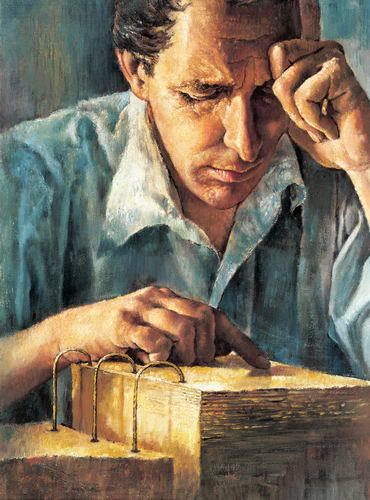
Translation or Transliteration

In response to a great post at "urban mormonism," I had the following thoughts:

I think much of the Book of Mormon is a "wooden translation" or transaliteration which accounts for the many "biblicisms" and "hebraisms". In my opinion, because of the literal way it was translated, the Book of Mormon is more hebraic than the Bible. Also, when a certain concept was being communicated that was identical to one found in the Bible, Joseph Smith used the same KJV language to express it. In this way the Book of Mormon has a "familiar spirit."

"And thou shalt be brought down, and shalt speak out of the ground, and thy speech shall be low out of the dust, and thy voice shall be, as of one that hath a familiar spirit, out of the ground, and thy speech shall whisper out of the dust" (Isa. 29: 4).

The translation of the Book of Abraham is also interesting. It is my opinion that if the original papyrus still existed, Joseph Smith's translation wouldn't match up exactly. Because, I think he wrote what should have been on the papyrus, and was not confined by what actually was on the papyrus. The papyrus got Joseph to ask the right questions. The Gold Plates came directly from Mormon and Mormoni, so Joseph Smith wouldn't have had to make corrections. With respect to the papyrus, we don't know where they came from or the quality of the writing on them. I look at the translation of Abraham to be more along the lines of his partial-translation of the KJV.

For more information of the hebraisms and hebrew poetic forms used in the Book of Mormon visit the Zarahemla Research Foundation.

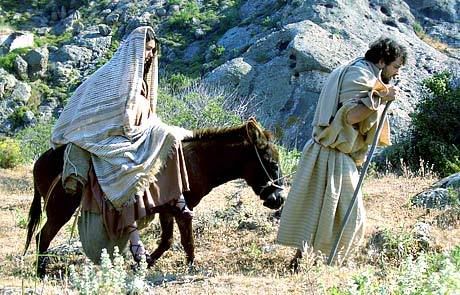
No Room in the Inn

In response to a great post at "By Common Consent," I had the following thoughts about some of the details of Jesus Christ's birth.
An opinion by 2 female, near-eastern studies PhDs said that Jesus was probably not born in a cave. Rather, Joseph and Mary would have had family in Bethlehem and would have planned to stay with them. Houses in Jeruselem at that time were two levels. The animals lived on the ground floor while the people lived upstairs. The verse "no room in the inn" could be translated to mean, there was no room in the upper part of the home, so they had to stay with the animals on the ground floor. According to them, there was no going from inn-to-inn looking for a place to stay.

This interpretation fixes another conundrum. It says that when the wise men found Christ, still in Bethlehem, they found him in a house. Matthew reads, "And when they were come into the house, they saw the young child with Mary his mother" (Matt. 2: 11). I recognize that that this is a trivial point, but I like to think that Joseph was a good boy scout.

Sunday, December 03, 2006

Explaining Mormonism

I came across a blog posting by Richard Bushman at "By Common Consent" and "Times and Seasons." Dr. Bushman is the author of the critically aclaimed biography of Joseph Smith"Rough Stone Rolling. The post talked about an upcoming religious conference at Yale this February. The proposed focus of the of the conference is to be, "Explaining Mormonism" using C. S. Lewis', Mere Christianity as the governing text. The concept got me thinking and I had a few ideas to pass along.

Lewis was a master at building on common beliefs. In his book "The Case for Christianity," Lewis begins by saying that even when 2 people disagree, there have to be certain things that the 2 agree on in order to have the disagreement. He also points out that many times people engaged in a disagreement spend less time debating right and wrong and more time explaining why they are the exception to the rule. Lewis was a master at identifying and using universal beliefs based on human experience to make his case for Christianity. He was so sucessful in his method, his ideas seem to transend Christian belief. So much so, that nearly all Christian denominations claim him as one of their own.

Similarly, The Master Teacher Jesus Christ, drew all of his parables from the fountain of human experience. Ammon, in the Book of Mormon, exemplified this as he defended the kings sheep and then asked King Lamoni "Believest thou that there is a Great Spirit?" The LDS writer which has done the best at explaining Mormonism following this paradigm is Stephen R. Robinson in his books "Believing Christ" and "Following Christ". The parable of the bicycle and the divers are masterful. Who could argue with them? Therefore, when these parables are used together with the spirit, like Nephi, it becomes "not possible that they could disbelieve his words" Using anecdotes and parables based on life experiences is an offshoot of teaching by example and neighborly service. Few can argue when it comes to righteous living and selfless sacrifice for another.

So, the key to explaining Mormonism is to use anecdotes and parables based on human experience. In this way, we are teaching scripture without reciting scripture. People disagree too much about scripture interpretation. But people more generally agree on human experience. For fun I'm going to list a few stories from my experience which relate to gospel principles with or without commentary.

#1 Eternal Progression
My brother Mike is hard-of-hearing and struggled with mental illness. Because of his mental illness it has been difficult for him to complete college and maintain steady employment. Years ago, while roommates in college, he was working at a local department store. He had an entry level position and like anyone had aspiriations to work up at the company and maybe become a manager at some point. One day, he expressed this aspiration to his manager who told him point blank, "you will never be a manager because you are deaf and cannot hear people on the phone." Notwistanding violating the "Americans with Disabilites Act," becuse of that comment, Mike went into a deep depression. He didn't even want to get out of bed in the morning. Mike had desires to one day support a family, and he knew that a minimum wage job wasn't going to cut it. He needed employment which would grow with him by giving him more responsibility as well as providing increased earning potential.

#2 Eternal Progression
I am a 2nd-year resident in Emergency Medicine. There are a lot of people in the hospital required to make it work. There are nurses, radiology techs, lab techs, unit clerks, respiratory therapics, physical therapists, social workers, and physicians etc. When I was in college, I volunteered in an ER and saw how everyone in the ER worked together to deliver patient care. Everyone's job was important. But there was something special about the job of the physician. He was the boss, the big cheese. He called the shots, made the difficult decisions. When someone was dying, everyone eyes focused on the doctor as the savior. The physician had the training and capability to orchestrate the team to save the patient's life. I was like the football team looking to their quarterback to lead the winning drive in the 4th quarter for a needed touchdown. Now the physician was careful not to think himself better than the others. But, when it came to entering the health field, I wanted to be a physician. I wanted to call the shots, I wanted to make the difficult decisions. It would require great personal sacrifice. But it would be worth it.

#3 Eternal Progression
I have a friend who is a nurse and another who is a radiology tech. Right now they make twice as much as I do. I was suprised to learn how disatisfied they were with their jobs. They made their career decisions based on what career would provide good pay with minimal schooling. Now that they have been in their careers for 10 years, they are bored. There are few new opportunities for learning and they are somehow dissatisfied at the idea that they will never be the decision maker. They take pride in their work, they go the extra mile, but in the end they will always be doing what someone else tells them to do. Now, my nurse friend is going back to school to become a nurse anesthnetist. As a nurse anesthnitist, in the OR, he will make all the decisions a physician anesthesiologist would. He won't make as much money, and will work under the direction of an anesthesiologist. But, he has an innate desire to gain the training and credentials to in order to expand his dominion at work.

#4 Eternal Progression
Before medical school I was doing reseach in a chemistry lab. I was able to complete a Masters Degree in Biochemistry. I was grateful for my time in the lab and the great research experience preceeding medical school. However, I remember thinking if I would be content with a Master's Degree if I didnt get accepted into medical school and needed to go into the science field. I realized that If I were to stop my schooling with a Masters Degree I would probably be a tech in some PhD's lab or at some pharmecutical company operating some piece of equipment or doing someone elses research; never being able to come up with my own ideas, never able to create, never able to explore my own interests and inspiration.

#5 Divine Parentage (generic)
My family is the source of my greatest joy. I have a son who is 6 years-old. I want him to experience the same joys that I have experienced. I want him to become a father just like my father raised me, and my grandfather raised my father. When my son has children of his own, he won't become a threat to me. His children will only further add to my joy. God sent us to earth and gave us a part in the power of creation. The home is our classroom and laboratory. As we become children and deal with the struggles of raising children we grow closer to our own father in heaven. And if we do well, throught the grace of Christ, the power of creation which we have been given in part, will be added upon.

#6 Divine Parentage
My wife tells this story about her mother. Oft times her mom would be working in another room of the house preparing a meal or cleaning and my wife would call out to her for help. Her mom would immediately reply that she was on her way to assist her. Then for some reason she wouldn't immediatety come. After some reminders, her mom would come to her aid profusely apoligizing that she had gotten side tracted. My wife used to feel that she was being flaky. Until she became a parent herself. Now she understands what her mother was going through. Now that she has 3 children of her own she can now more fully understand what it must have been like for her mother who had 6 children at the time. And only now after my wife has become a mother herself has she been able to understand, relate, and connect with her mother in a new may.

#7 Grace and Works (generic)
There is a addage that nearly everyone agrees with which explains the LDS view on grace and works. "Work like everything depends on you and then pray like everything depends on the Lord."

#8 Eternal Relationships
A woman came into the ER a few months ago after passing out at church. After getting some history from her friend who accompanied her, and getting what information I could from her directly, I learned that she was grief stricken after the recent deaths of her father and her boyfiend. She was in the middle of the sermon at her Christian church when the feelings of grief built up so much she hyperventillated and passed out in the middle of the congregation and was taken by ambulance to the ER. She was still very tearful in the ER. I remember feeling what a shame it was that her faith had failed to comfort her in her darkest hour of grief. Her christian belief taught her that relationships ended with dealth and family relationships where only for as long as a person should live or until death do us part. However, I shared with her my hope that relationships were a treasure that we could lay up in store where moth and rust didnt corrupt and where theives could not break in and steal. Our family and social relationships can be our treasure in heaven. Despite what the egyptions thought, we can't take our gold and silver into the next life, but we can take friends and family.

I'm sure you could think of many examples in your own life.

Saturday, December 02, 2006

Free Trade and Missionary Work


Book of Mormon provides some interesting commentary on factors such as "Free Trade" that prepared the Lamanites to accept the Gospel of Jesus Christ. Hundreds of years before the time of King Benjamin's reign, Enos describes the Lamanites by saying:

"the people of Nephi did seek diligently to restore the Lamanites unto the true faith in God. But our labors were vain; their hatred was fixed, and they were led by their evil nature that they became wild, and ferocious, and a blood-thirsty people, full of idolatry and filthiness; feeding upon beasts of prey; dwelling in tents, and wandering about in the wilderness with a short skin girdle about their loins and their heads shaven; and their skill was in the bow, and in the cimeter, and the ax. And many of them did eat nothing save it was raw meat; and they were continually seeking to destroy us"(Enos 1: 20).

Later on, a group of apostate and estranged priests led by a man named Amulon steal Lamanite daughters for wives. Years later, the Laminites discover the priests and but instead of punishing them for their crimes, they set them up as teachers. The Book of Mormon reads:

"And [King Laman] appointed teachers of the brethren of Amulon in every land which was possessed by his people; and thus the language of Nephi began to be taught among all the people of the Lamanites. And they were a people friendly one with another; nevertheless they knew not God; neither did the brethren of Amulon teach them anything concerning the Lord their God, neither the law of Moses; nor did they teach them the words of Abinadi; But they taught them that they should keep their record, and that they might write one to another. And thus the Lamanites began to increase in riches, and began to trade one with another and wax great, and began to be a cunning and a wise people, as to the wisdom of the world, yea, a very cunning people, delighting in all manner of wickedness and plunder, except it were among their own brethren" (Mosiah 24: 4).

Unknowingly, Amulon assisted in the eventual conversion of the Lamanites. By teaching the Lamanites to read the write the Nephite language they learned to read the language in which the scriptures were writen in. By teaching the Lamanites economic practices, they develped a degree of civility. After the conversion of the Lamanites by Alma the Younger and the sons of Mosiah, the Book of Mormon describes the Lamanites in a different light, “And they began to be a very industrious people; yea, and they were friendly with the Nephites; therefore, they did open a correspondence with them, and the curse of God did no more follow them” (Alma 23: 18).

Free trade practices also assisted in the conversion process of the Lamanites. The leader of the Anti-Nephi-Lehi's declared, "I thank my great God that he has given us a portion of his Spirit to soften our hearts, that we have opened a correspondence with these brethren, the Nephites. And behold, I also thank my God, that by opening this correspondence we have been convinced of our sins, and of the many murders which we have committed” (Alma 24: 8-9).

Later, after years of war, missionary work and free trade helped establish peace thoughtout the land.

“The people of the church did have great joy because of the conversion of the Lamanites, yea, because of the church of God, which had been established among them. And they did fellowship one with another, and did rejoice one with another, and did have great joy. And it came to pass that the Lamanites did also go whithersoever they would, whether it were among the Lamanites or among the Nephites; and thus they did have free intercourse one with another, to buy and to sell, and to get gain, according to their desire” (Hel. 6: 3-8).

False Religion to Fascism

The Book of Mormon speaks of 3 things that if propagated thoughout a people would result in their eventual destruction.

#1 False Religion. Modern Christianity claims that the day of prophets and apostles has ceased. There is no one any more who speaks for God. Consequently, it seems anyone can start a church and teach his own version of religion. This practice is referred to as priestcraft and is a practice which, according to scripture, can destroy a civilization. Nehor was the first in the Nephite to practice preistcraft. Before Nehor, there weren't competing religions. You either believed or not. Nehor rejected the principle of a lay clergy in favor of a professional clergy who were paid by the congregants. Because of the pressures to make money, Nehor's professional clergy preached to "become popular" or to not offend (Alma 1: 3). Consequently, the people could now participate in a counterfit religion without being reminded of their many sins.

What do I mean by "becoming popular?" Let's say a preacher starts up a church based on the teachings of the Bible as he understands them. He and his family are directly supported by the tithes of the people. If he does not fill the church and pass the plate, he is bankrupt and his kids go hungry. Now lets say that a particular husband and wife are his biggest monetary supporters. They sit on the front row at church every Sunday. But, they happen to engage in open adulterous relationships. How many sermons on chastity and fidelity do you think that preacher will give. Not a one. Because he has a conflict of interest. If he teaches the law of chastity, he risks offending and losing his biggest contributors. Therefore, the preacher will preach to become popular. He will teach what people want to hear and not what they need to hear.

#2 Religious Extremism or Fascism. Extremists or Fascist enforce their religious and political ideologies by force. Anyone who refuses to accept their beliefs is exterminated. Nehor was also the first fascist among the Nephites. Gideon, an old and wise Nephite, engaged Nehor in a debate over religion. Nehor became so enraged he murdered Gideon over the dispute. The prophet Alma condems Nehor and warns us about the practice of priestcraft and fascism, "Behold, this is the first time that priestcraft has been introduced among this people. And behold, thou art not only guilty of priestcraft, but hast endeavored to enforce it by the sword; and were priestcraft to be enforced among this people it would prove their entire destruction" (Alma 1: 12).

Amlici, an apostate and follower of Nehor, sought to become a king over the Nephites. To prevent Amlici's rise to power, an election was organized so that the voice of the people could decide whether to reestablish a king or preserve their representative democracy. Amlici lost but later sparked a civil war in which he sought to force the majority of the Nephites to support him as King against their will. To gain the upper hand, the Amlicites allied with the Lamanites. When the Nephites, Amlicites and Lamanites came to battle, the Amlicites had cut all their hair short and painted their heads red. Mormon proceeds to comment on how the Lord curses, or marks, a people so the the believers do not mix with unbelievers: "And this was done that. . . thereby the Lord God might preserve his people, that they might not mix and believe in incorrect traditions which would prove their destruction" (Alma 3: 8).

This talk in the Bible and Book of Mormon about God cursing people is a Hebrew figure of speech. The Lord does not curse people any more than he painted the Amlicites heads red. The Amlicites painted their own heads red, people curse themselves, and God mearly allows it. Apostate groups want to destinguish themselves. This is evident among the homosexual community in the way they talk. Their manner of speach is a way for them to identify each other. And, on the other side, it helps heterosexuals identify them as well and not join in with their incorrect behavior.

#3 Secret Combinations: Because these false groups cannot gain power over the people by open and direct force, they seek to disguise their actions and engage in secret operations and conspiracy. They will engage in covert, gang, mob, and terrorist behavior. They will seek to infiltrate governments and to undermine the foundation of the people. Mormon comments on their intentions: "For it cometh to pass that whoso buildeth [secret combinations] up seeketh to overthrow the freedom of all lands, nations, and countries; and it bringeth to pass the destruction of all people" (Ether 8: 25).

This activity was conducted in the Book of Mormon by a group known as "the Gaddiaton Robbers." These robbers and murderers enstalled their own judges so that if they were caught and indited for a crime they would receive no punishment. The Gaddiaton Robbers were responsible for several assassinations of government leader as well as the eventual failure of the government. At one point the entire nation divided itself into tribes. Mormon comments that these secret combinations resulted in the destruction of his people, "And behold, in the end of this book ye shall see that this Gadianton did prove the overthrow, yea, almost the entire destruction of the people of Nephi" (Hel. 2: 13).

The scriptures give us a key to recognizing the true believer versus the false believer. The false believer will attempt to force his belief on others and even resort to genocide. The true believe, on the other hand, will die for his belief. The Book of Mormon illustrates this point by contrasting the actions of the Amlicites, Amalikites, Amulonites, and Zoromites with those of the Anti-Nephi-Lehi's, or the people of Ammon. The Ammonites were Lamanites converted to a belief in Jesus Christ. Following the conversion of the Ammonites, other Lamanites were insighted to anger against them by apostate Nephites. The Lamanites and apostate Nephites came against the Ammonites to destroy them because of thier conversion to Christianity. In stead of picking up their swords to defend themselves, the Ammonites "prostrated themselves before them to the earth, and began to call on the name of the Lord; and thus they were in this attitude when the Lamanites began to fall upon them, and began to slay them with the sword" (Alma 24: 23).

However it says, "Now when the Lamanites saw that their brethren would not flee from the sword, neither would they turn aside to the right hand or to the left, but that they would lie down and perish, and praised God even in the very act of perishing under the sword—. . . they did forbear from slaying them; and there were many whose hearts had swollen in them for those of their brethren who had fallen under the sword, for they repented of the things which they had done. And it came to pass that they threw down their weapons of war, and they would not take them again, for they were stung for the murders which they had committed; and they came down even as their brethren, relying upon the mercies of those whose arms were lifted to slay them. And it came to pass that the people of God were joined that day by more than the number who had been slain"(Alma 24: 23).

Mormon comments on this history by saying, "Now, among those who joined the people of the Lord, there were none who were Amalekites or Amulonites, or who were of the order of Nehor, . . . And thus we can plainly discern, that after a people have been once enlightened by the Spirit of God, and have had great knowledge of things pertaining to righteousness, and then have fallen away into sin and transgression, they become more hardened, and thus their state becomes worse than though they had never known these things" (Alma 24: 30).

The Book of Mormon Perdition Progression.
1. Posses the truth (Rom. 2: 12).
2. Perverting the ways of the Lord: e.g. excusing yourself in your sins, hiding your sins (Alma 42: 30)(2 Ne. 28: 9).
3. Individual Apostasy: come to believe in your own lies (Alma 30: 53)(Isa. 3: 9).
4. Priestcraft: preach popular doctrine for gain (1 Ne. 22: 23)(Alma 1: 3).
5. Religious Extremism or Political Fascism: To force your beliefs on others (Alma 1: 12)(Alma 30: 11).
6. Secret Combinations: Conspiracy, terrorism, assassination, genocide for power and wealth (Hel. 2: 4, 8)(Hel. 6: 29-30)(2 Ne. 9: 9)(2 Ne. 26: 22)(Moses 5: 31)(Ether 8: 25).
7. Unpardonable Sin: Denying the Holy Ghost and shedding innocent blood (Jacob 7: 19)(Alma 39: 6)(Mosiah 17: 10)(D&C 132: 19, 26-27).

According to the Book of Mormon, to preserve our civilization, we must resist false religion, religious and political extremism, fascisim, and secret combinations. The Apostle Paul also taught this sobering truth when he said: "For we wrestle not against flesh and blood, but against principalities, against powers, against the rulers of the darkness of this world, against spiritual wickedness in high places" (Eph. 6: 12).